About the Grants
Paralyzed Veterans of America's Research Foundation Board of Directors met on November 8th, 2024, to decide which candidates would be the best deserving of the Foundation's annual awards.
The Foundation awarded six grants to recipients whose work excelled in the areas of spinal cord injury/disease, including respiratory recovery after SCI, pressure ulcers, autonomic dysreflexia, and foot safe technology for wheelchair footpads, as well as other topic areas.
The grants are awarded for a one- two- or three-year period; the grant cycle beginning on January 1, 2025.
This year, the Foundation awarded a total of $1,060,171 in grants.
The grants for FY2025 are funded in four categories: basic science, clinical applications, design & development, and fellowships.
2025 Grant Recipients
Michael Fehlings, University Health Network,
“Restoring Functional Synaptic Connectivity to Augment the Effectiveness of Targeted Rehabilitative Training Following Cervical Spinal Cord Injury”
$200,000
Project Summary:
Most spinal cord injury (SCI) patients retain neural tissue near the site of injury, but recovery is limited by a disruption of functional neuron connections, synapses. This limits arm and leg recovery, as well as impedes vital functions such as the respiratory, cardiovascular, and immune systems. To restore these functional circuits, we are developing a clinically relevant approach through an FDA-approved and repurposed drug, torsemide, with targeted forelimb rehabilitation. For the mechanism part of our investigation, we hypothesize that torsemide will reduce the aberrant chloride concentration disrupting inhibitory signaling in neural circuits post-SCI, which will enhance rehabilitation-induced improvements in signal propagation. By restoring communication in these neural circuits, this approach hopes to improve movement, sensation, and overall function in SCI patients. This treatment strategy holds significant translational relevance, with the potential to greatly impact the lives of SCI patients.
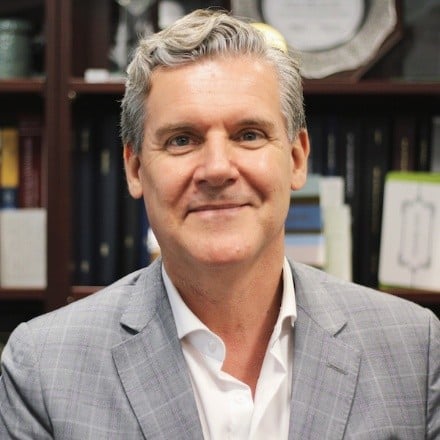
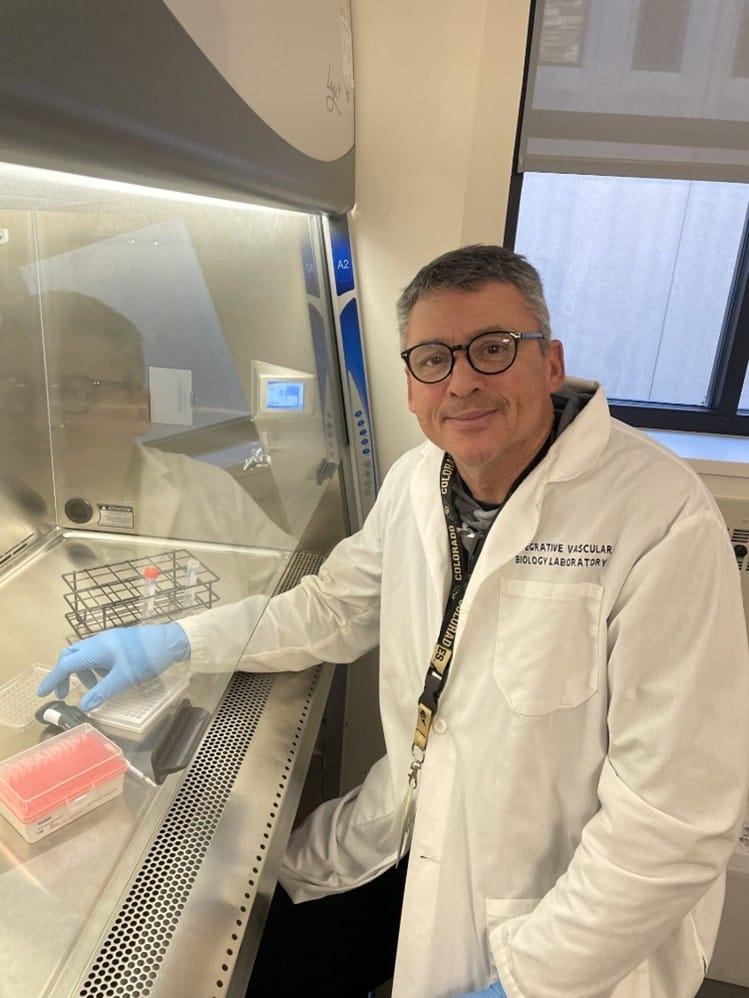
Christopher DeSouza, University of Colorado Boulder
“Vascular Consequences of Neurogenic Obesity in Adults with SCI”
$200,000
Project Summary:
Most spinal cord injury (SCI) patients retain neural tissue near the site of injury, but recovery is limited by a disruption of functional neuron connections, synapses. This limits arm and leg recovery, as well as impedes vital functions such as the respiratory, cardiovascular, and immune systems. To restore these functional circuits, we are developing a clinically relevant approach through an FDA-approved and repurposed drug, torsemide, with targeted forelimb rehabilitation. For the mechanism part of our investigation, we hypothesize that torsemide will reduce the aberrant chloride concentration disrupting inhibitory signaling in neural circuits post-SCI, which will enhance rehabilitation-induced improvements in signal propagation. By restoring communication in these neural circuits, this approach hopes to improve movement, sensation, and overall function in SCI patients. This treatment strategy holds significant translational relevance, with the potential to greatly impact the lives of SCI patients.
Laura Rice, University of Illinois at Urbana Champaign
“Assessment and Prediction of Fall Concerns Among People with SCI and MS who use Wheelchairs and Scooters”
$200,000
Project Summary:
Concerns about falling (CaF) are a major issue for people living with Spinal Cord Injury (PwSCI) and Multiple Sclerosis (PwMS) who use wheelchairs or scooters (WC/S) every day. These worries can keep people from participating in important activities in their homes and communities that they either need to do or enjoy. This project aims to create an outcome measure that clinicians and researchers can use to effectively assess CaF. By accurately evaluating CaF, clinicians and researchers will be better equipped to develop educational programs that help manage these concerns, ultimately supporting people living with SCI and MS who use wheelchairs in achieving their desired activities at home and within their community.

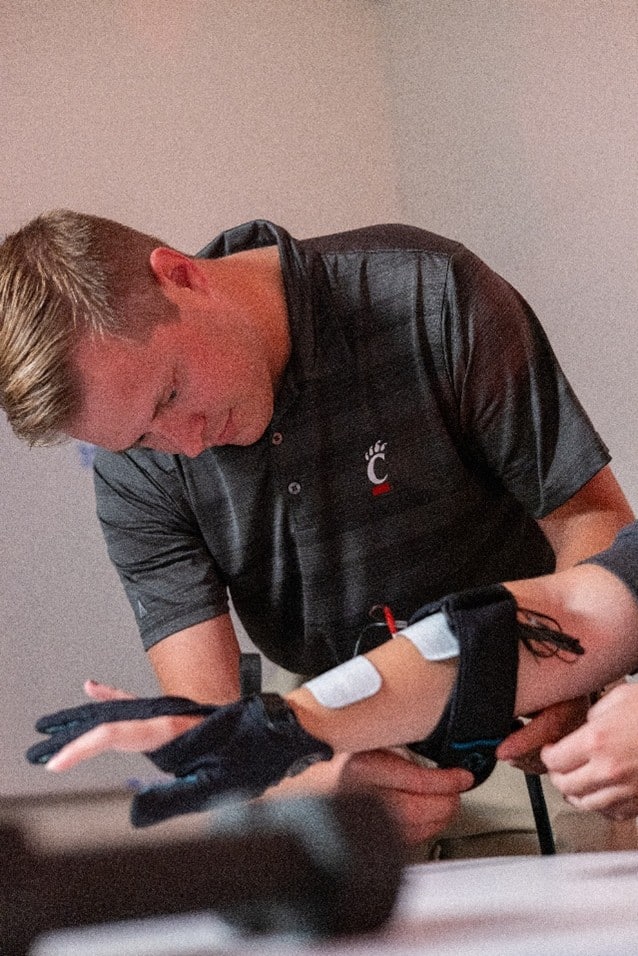
Derek Wolf, University of Cincinnati
“Cooperative design of a user-friendly FES-integrated passive exo to restore grasping ability in individuals with SCI/D”
$199,797
Project Summary:
This project aims to develop a functional electrical stimulation-integrated passive exo glove for individuals with spinal cord injuries or disease to assist them in independently performing daily grasping tasks. The developed device will combine functional electrical stimulation, which uses electrical signals to activate muscles, with a passive exoskeleton to coordinate hand movements. Working with a collaborative team of end-users, clinicians, and engineers, we will follow a user-centered, iterative design process to develop and validate a device that is easy to use, functional, and comfortable for daily at-home use. The design process will follow FDA guidelines with a focus on translating the technology outside the research lab. The cooperative design process will result in a novel assistive device for at-home, independent use by individuals with spinal cord injuries or disease.
Manrui Zhang, Northwestern University Feinberg School of Medicine
“Engaging Veterans with Spinal Cord Injury in Robust Cognitive Testing: Accommodation Solutions and Implementation Determinants to Using NIH Toolbox Cognition Battery during Inpatient Rehabilitation"
$110,374
Project Summary:
People with Spinal Cord Injury (SCI) are at 13 times greater risk for cognitive impairment. This risk can be even higher among veterans due to the high prevalence of traumatic brain injury and post-traumatic stress disorder. Cognitive impairment significantly undermines the effectiveness of SCI rehabilitation, which requires intensive learning of new skills to achieve optimal outcomes. While a clinical guideline recommends reliable cognitive testing during inpatient rehabilitation, standardized cognitive tests were not commonly implemented during SCI rehabilitation. Most tests are difficult to use for people with SCI in a fast-moving clinical environment because of accessibility and implementation challenges due to motor impairment, pain, and fatigue. This proposed research aims to generate feasible accommodation solutions and an implementation plan to facilitate accessible and scalable cognitive testing in SCI rehabilitation, focusing on the NIH Toolbox Cognition Battery, a promising tool to engage veterans with SCI in reliable cognitive testing.

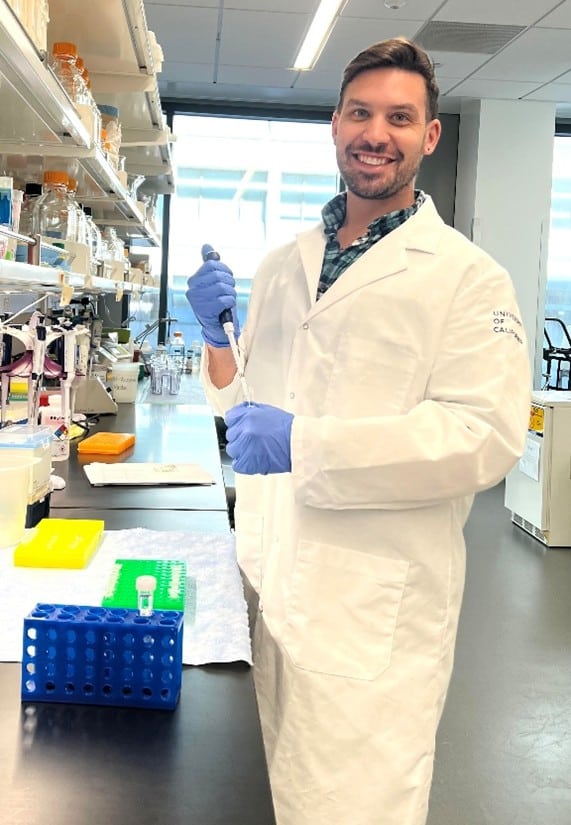
Jason Gumbel, University of California San Francisco
“Mechanisms of kidney dysfunction following spinal cord injury”
$150,000
Project Summary:
Spinal cord injury (SCI) commonly causes bladder, kidney, and cardiovascular dysfunction, all of which are high priority quality of life measures. Currently, little is known about the mechanisms of kidney dysfunction following SCI. Cardiovascular and renal function are two systems that can influence the other. SCI negatively impacts both cardiovascular and renal health independently, resulting in a potential cyclical dysfunctional relationship where one system can negatively influence the other. The overall goal of this study is to understand the impact of SCI on kidney function and test potential therapeutic strategies to see if treatment of one system can improve the other.