Multiple Sclerosis Newsletter
Fall 2024
What You Should Know:
Pseudobulbar Affect
Pseudobulbar affect (PBA) is when a person has an uncontrolled emotional reaction, usually laughing or crying, that is out of proportion or inappropriate to a given stimuli. It is caused by the type of damage to the brain stem often found in diseases, like MS or ALS.
Committee Spotlight
The following first appeared in Multiple Sclerosis News Today on March 22, 2024.
From the Editor
Pseudobulbar Affect
Pseudobulbar affect (PBA) is when a person has an uncontrolled emotional reaction, usually laughing or crying, that is out of proportion or inappropriate to a given stimuli. It is caused by the type of damage to the brain stem often found in diseases, like MS or ALS.
Depression can amplify appropriate emotional reactions, like being sadder than normal when presented with an unfortunate situation. PBA, on the other hand, might cause a person to laugh at a tragic situation or burst into tears when faced with a situation that does not call for that type of reaction.
It is estimated that 25 to 46 percent of people with MS experience PBA. The numbers span such a wide gap because this condition often is underreported. If you think you are having symptoms of PBA, talk to your doctor right away. While this condition has no cure, it can be treated.
The below quiz is a great place to start your diagnosis journey.
Onyx Phase Changing Cooling Vest
The hot months of summer have come to an end, and that's good news for the majority of people with MS who are affected by heat. Many people with this disease use some form of cooling product to make hot days more manageable. Unfortunately, many cooling vest products rely on ice, so the user is either made uncomfortably cold or is wet by thawing ice.
Onyx Cool makes a vest that cools the user with a phase changing material. The chemical in the vest changes from solid to liquid, producing a milder cooling effect than ice, keeping the user dry.
Onyx Cool makes a vest that cools the user with a phase changing material. The chemical in the vest changes from solid to liquid, producing a milder cooling effect than ice, keeping the user dry.
 |
 |
These vests are available in the VA ordering system. The NSN is: 8415-01-522-2473
Committee Spotlight
In the News
"Crying at Donald Duck, and Other Strange Emotional Reactions" by Benjamin Hofmeister Multiple Sclerosis News Today on August 08, 2024.
Recent Events
PVA Multiple Sclerosis Committee Notes
from the 2024 PVA Healthcare Summit
 |
To kick off the 2024 PVA Healthcare Summit + Expo, Dr. David Putrino presented a keynote address highlighting advancement in Implanted Brain Computer Interfaces (BCI). Dr. Putrino approaches the neurological limitation of his patients as an opportunity to challenge convention in order to advance medical care and quality of life through highly innovative technology.
Dr. Putrino assisted a paralyzed Veteran who was struggling with loss of autonomy and the ability to participate in activities he had once enjoyed, like playing video games. Dr. Putrino and his team developed the BCI technologies and methods of implementation to allow this individual to not only play games but also participate in adaptive gaming competitions through Logitech. The documentary "Quad Gods" was released on HBO which follows the success of the team.
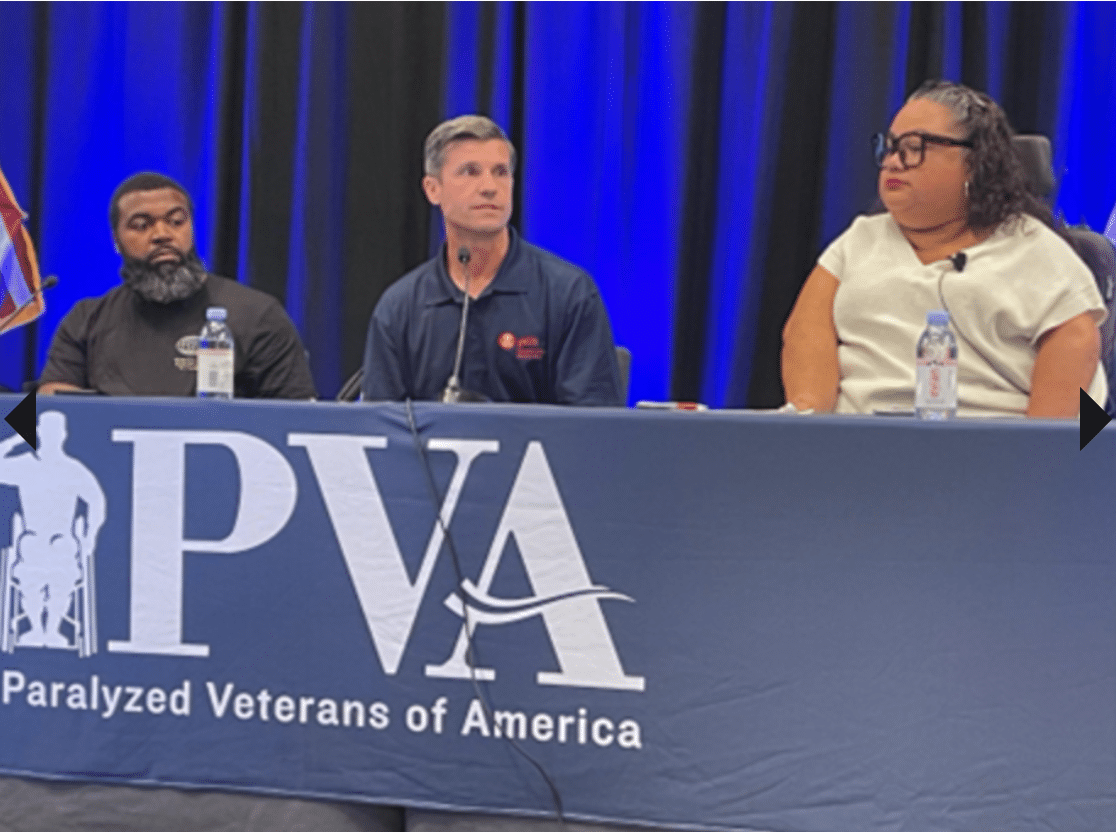
Dr. Putrino’s presentation set a tone of innovation, progress, and patient-centered care for the event, which was generally provided for healthcare workers and their teams.
Each morning started with a keynote address and was followed by sessions along three tracks: Spinal Cord Injury (SCI), Multiple Sclerosis (MS), and Amyotrophic Lateral Sclerosis (ALS).
As a member of the PVA MS Committee, I attended as many MS-related sessions as possible. In these sessions, doctors, researchers, and other care providers of all types presented their work. Some were focused on things they have learned about MS, its symptoms, and treatments, as well as how to leverage what we already know to more effectively treat the disease. One common theme was the discovery that treating MS with highly effective Disease Modifying Treatments (DMTs) earlier in the disease appears to slow the progression of the more disabling symptoms. Previously, an escalation from less effective to more effective DMTs was the recommendation since the highly effective DMTs come with greater risks. The trend is changing with more doctors willing to accept some healthcare risks in order to postpone as much disease progression as possible.
Other sessions were focused on progression of research and future areas of research, such as comparing MRI strengths and methods. Currently, brain MRIs are the standard with the addition of cervical spine (neck area) MRIs being added when indicated. The MS panelists and researchers noted a likelihood of thoracic spinal cord (midsection of the back) involvement as well and suggested cervical and thoracic spinal cord MRIs accompany brain MRIs at initial diagnosis with routine repetition for comparison. In relation to MRIs, the MS specialists also preferred a certain strength of MRI when comparing images for disease progression.
This leads me to the third major focus of PVA’s Healthcare Summit. Care professionals across all fields presented “best practices” to make the care experience as good as possible for the patients they all serve. Related to the previously mentioned ideal MRI strength, the neurologists noted it’s better to have scans consistently at the same strength of MRI than it is to try to get the ideal strength without consistency. This is important when considering where the patient lives and regular access to care. Having consistently “good” MRIs is better than going back and forth between “good” and “great” MRIs as the inconsistent imaging strength makes it difficult to compare images over time, which is the whole purpose of routine MRIs for MS. The phrase, “Meet the Veteran where they are,” came up more than once as the providers recognized the distance some may need to travel for optimal equipment, while they may have acceptable equipment much closer to home. If the Veteran is routinely able to access good equipment in their area, providers don’t need to push their patients to attend appointments at large hospitals farther away as this puts a strain on the Veteran unnecessarily.
Moving on with the theme of convenience for patients, the MS Centers of Excellence (CoEs) had a lively discussion regarding their coordinated system of care. Currently, the Veteran has nearly a full day of appointments in order to see all specialties related to their care when attending an MS CoE appointment. The providers noted the day is exhausting for the patients, but it was purported to be better than the patient needing to attend four or five individual appointments scheduled on different days. That said, the providers brainstormed ways to make those long days more manageable for their patients by working with food services in advance to offer snacks or meals, recommending breaks, or even offering a bed for rest between appointments.
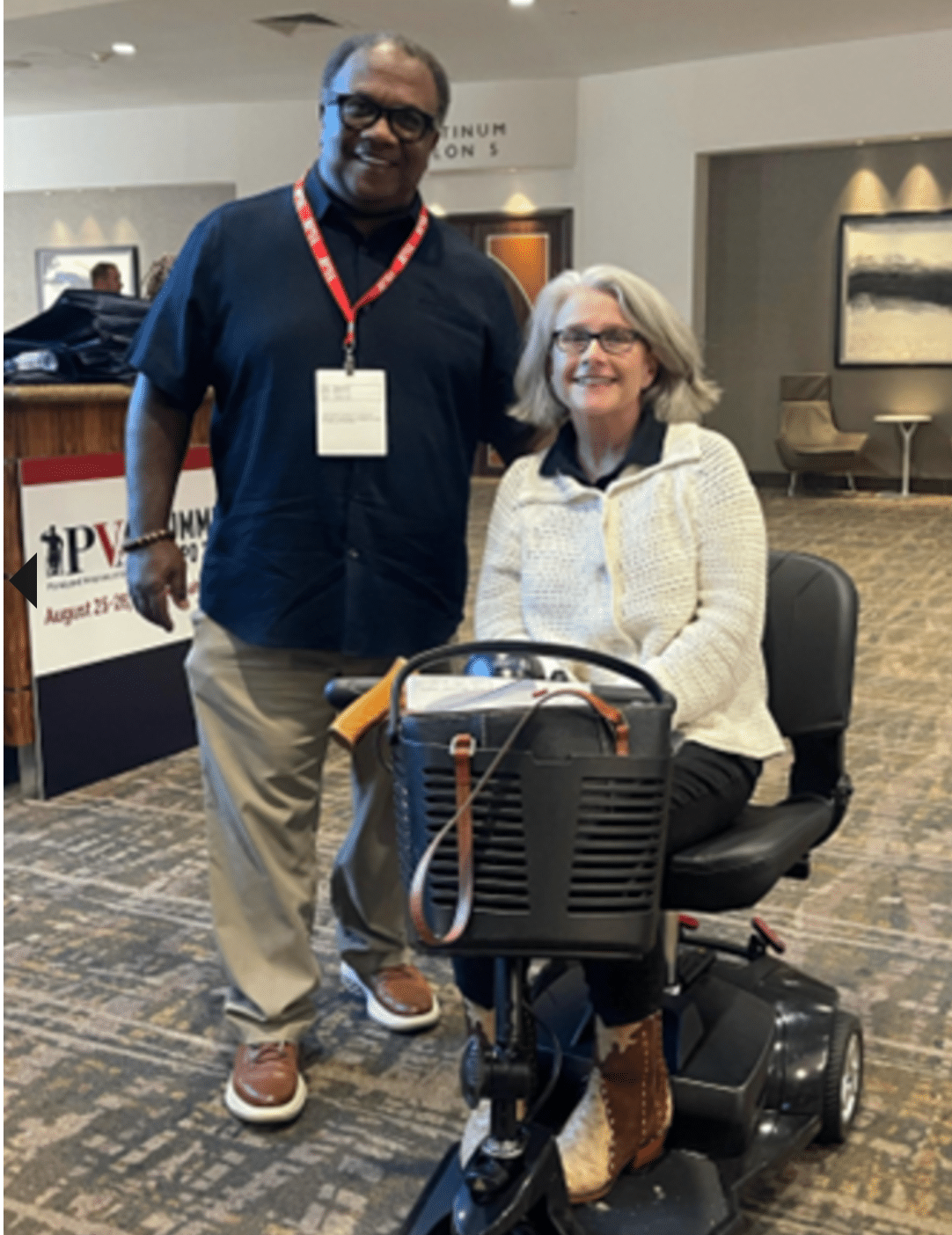
It was wonderful to attend this event focused on supporting and informing clinicians. I expected to primarily be a fly on the wall, but I was pleasantly surprised with how open all of the presenters and panelists were to questions and perspectives from our PVA MS Committee members. All in all, the event was deeply informative and collaborative.
 |
 |
Resources
 |
National MS Society’s Veterans with Multiple Sclerosis webpage includes information and links to Veterans resources including a Virtual Veterans-Self-Help-Group for Veterans, Military Members, and Care Partners, as well as an Ask an MS Expert Veterans Program.
MS & Vets Podcast
 |
The VA MS Centers of Excellence MS & Vets podcast series discusses important issues related to the health and quality of life for Veterans with multiple sclerosis. During every episode you’ll hear subject matter experts weigh in on MS issues and VA services. A new podcast is posted the 2nd Monday of each month.
Can Do MS
Can Do helps families with MS thrive. Our free programs and resources help people living with multiple sclerosis and their care partners make each day the best it can be. Learn how MS can impact your life, find motivation and personalized guidance to overcome challenges, and build a positive support network. Be sure to check out their fantastic webinar series, as well as educational posts like this one on MS fatigue.
Print Brochures and Flyers
You can print or download brochures from:
We Need Your Input...Join the MS Committee TODAY!
As we work on initiatives, we need more input and assistance from you. Check out more about our different MS Committee Teams below.

Recreation Team
We know MS presents unique challenges when it comes to participating in traditional sports and recreational activities. Among some of the events we’d love to coordinate or highlight include: a PVA MS Committee Retreat, similar to the annual PVA Women Veterans Empowerment Retreat, as well as Chapter-led events like local MS Walks. This team will work with PVA’s Sports & Recreation Department to explore and organize new opportunities for Veterans living with MS.
We know MS presents unique challenges when it comes to participating in traditional sports and recreational activities. Among some of the events we’d love to coordinate or highlight include: a PVA MS Committee Retreat, similar to the annual PVA Women Veterans Empowerment Retreat, as well as Chapter-led events like local MS Walks. This team will work with PVA’s Sports & Recreation Department to explore and organize new opportunities for Veterans living with MS.

Newsletter Team
Ben Hofmeister from the Mid-South Chapter and Sarah LaBrada from the California Chapter head up our MS newsletter efforts. If you are interested in helping out, writing an article, or have questions about what you read, email us at MSCommittee@PVA.org.
Ben Hofmeister from the Mid-South Chapter and Sarah LaBrada from the California Chapter head up our MS newsletter efforts. If you are interested in helping out, writing an article, or have questions about what you read, email us at MSCommittee@PVA.org.
PVA National MS Committee Members
Izzy Abbass – Co-Chair
Ken Ness – Co-Chair
Joe Bludeau – External Orgs Coordination
Jerrod Harris – Chapter MS Lead Liaison
Mike Partridge – Committee Member
Ben Hofmeister – Committee Member
Ken Ness – Co-Chair
Joe Bludeau – External Orgs Coordination
Jerrod Harris – Chapter MS Lead Liaison
Mike Partridge – Committee Member
Ben Hofmeister – Committee Member
PVA Staff
Juliet Pierce – Associate Director of Medical Services, RN
PVA Chapter MS Lead
To contact your chapter MS lead, please call or email Jerrod Harris at 410-635-0145 or jharris@colonialpva.org or reach out to your local PVA Chapter office.



PVA is a 501(c)(3) tax-exempt, non-profit organization.
Donate | Privacy Policy | Financials | Careers
Paralyzed Veterans of America, 1875 Eye Street NW, Suite 1100, Washington, DC 20006
In accordance with IRS regulations, we confirm that no goods or services were provided by Paralyzed Veterans of America in return for contribution.