Multiple Sclerosis Newsletter
Summer2024
What You Should Know:
MS Disease Modifying Treatment Therapy Formulary Change at the VA
As you may be aware, the Veterans Administration Pharmacy Benefits Management (PBM) has added new formulary disease modifying therapies (DMT). Many Veterans with MS have been concerned about this change, concerned that they will be required to change a therapy that is working for them. PVA’s MS Committee brought this issue to the forefront.
Though PVA seldom advocates with the VA regarding contracting, the concerns about impact to PVA members were significant enough that PVA leadership, CEO Carl Blake, Chief Policy Officer Heather Ansley, and Director of Research and Education and MS Committee liaison Cheryl Vines met with the Deputy Chief Consultant of Pharmacy Benefits Management Jennifer Martin, PharmD, BCPP to address these concerns. While we were not able to impact the formulary contract, we were able to impact the process, especially in educating both patients and providers about their options regarding the new formulary medication, Briumvi. Dr. Martin agreed that PBM would develop an educational letter for both Veterans with MS and their VA health care providers. This is not commonly provided with formulary changes.
The letter below, will be sent from each VA Hospital to Veterans who receive DMT treatment. You should receive this from your hospital in the next few weeks, before the formulary policy takes effect in late June or early July, 2024. If you do not receive the letter, you should contact Pharmacy Services at the hospital where you receive your care. Please note, this formulary policy will not impact Veterans with primary progressive MS, as it has not been found effective for this type of MS.
We urge you to advocate for yourself to assure you get the treatment that you need.
The letter you should receive is below:
Dear Veteran, This letter is to inform you of new information about VA pharmacy coverage of anti-CD20 monoclonal antibodies for relapsing forms of multiple sclerosis (MS). Anti-CD20 antibodies currently used for MS include: ocrelizumab (OCREVUS®), ofatumumab (KESIMPTA®), rituximab including biosimilars (RITUXAN®, RUXIENCE®), and ublituximab (BRIUMVI®). When there are multiple medications in the same class (meaning the main way they work is the same), VA may select one medication to have on formulary. Ublituximab-xiiy (BRIUMVI®) is the formulary option for most people starting anti-CD20 antibody therapy for relapsing forms of MS. This letter answers some commonly asked questions and provides recommendations about how to discuss this information with your healthcare team.
Will I need to switch to ublituximab if I am already on a different MS medication?
No. This will not require you to change from the medication you are
currently taking to ublituximab. As always, your MS provider may
discuss trying an anti-CD20 antibody or a different medication if
medically necessary.
Will I have to try an anti-CD20 antibody in order to try any other medication for MS?
No. What medication you start for your MS is a decision that you and
your MS provider make together. VA will not require that you try an anti-
CD20 antibody first before other medications.
Will I need to switch to ublituximab if I am already on a different MS medication?
No. This will not require you to change from the medication you are
currently taking to ublituximab. As always, your MS provider may
discuss trying an anti-CD20 antibody or a different medication if
medically necessary.
What if my healthcare provider decides I should start an anti-CD20 antibody, but there is a reason I can’t use ublituximab?
You and your MS provider should discuss the details of any medication
you start to determine if it is right for you. If you both decide an anti-
CD20 antibody is right for you, but there is a reason that you are not a
good candidate for ublituximab; your MS provider may consider an
alternative.
If I have been diagnosed with Primary Progressive MS (PPMS), how does this affect me?
Not all anti-CD20 antibodies have been proven to work in PPMS. The
preferred agent will affect people starting an anti-CD20 antibody with
relapsing forms of MS only. Relapsing forms of MS include relapsing-
remitting MS (RRMS), active secondary progressive MS (active SPMS),
and clinically isolated syndrome (CIS).
The goal of the [insert VA Site Name] is to provide you with the best possible results from your medication. If you have questions or concerns regarding this, please contact the [insert VA Site Name] (8:30 a.m. - 5:00 p.m., Monday through Friday) at [insert site phone number & toll-free numbers]. When the VA operator answers, please request outpatient pharmacy at extension [insert outpatient pharmacy extension].
Sincerely,
Though PVA seldom advocates with the VA regarding contracting, the concerns about impact to PVA members were significant enough that PVA leadership, CEO Carl Blake, Chief Policy Officer Heather Ansley, and Director of Research and Education and MS Committee liaison Cheryl Vines met with the Deputy Chief Consultant of Pharmacy Benefits Management Jennifer Martin, PharmD, BCPP to address these concerns. While we were not able to impact the formulary contract, we were able to impact the process, especially in educating both patients and providers about their options regarding the new formulary medication, Briumvi. Dr. Martin agreed that PBM would develop an educational letter for both Veterans with MS and their VA health care providers. This is not commonly provided with formulary changes.
The letter below, will be sent from each VA Hospital to Veterans who receive DMT treatment. You should receive this from your hospital in the next few weeks, before the formulary policy takes effect in late June or early July, 2024. If you do not receive the letter, you should contact Pharmacy Services at the hospital where you receive your care. Please note, this formulary policy will not impact Veterans with primary progressive MS, as it has not been found effective for this type of MS.
We urge you to advocate for yourself to assure you get the treatment that you need.
The letter you should receive is below:
Dear Veteran, This letter is to inform you of new information about VA pharmacy coverage of anti-CD20 monoclonal antibodies for relapsing forms of multiple sclerosis (MS). Anti-CD20 antibodies currently used for MS include: ocrelizumab (OCREVUS®), ofatumumab (KESIMPTA®), rituximab including biosimilars (RITUXAN®, RUXIENCE®), and ublituximab (BRIUMVI®). When there are multiple medications in the same class (meaning the main way they work is the same), VA may select one medication to have on formulary. Ublituximab-xiiy (BRIUMVI®) is the formulary option for most people starting anti-CD20 antibody therapy for relapsing forms of MS. This letter answers some commonly asked questions and provides recommendations about how to discuss this information with your healthcare team.
Will I need to switch to ublituximab if I am already on a different MS medication?
No. This will not require you to change from the medication you are
currently taking to ublituximab. As always, your MS provider may
discuss trying an anti-CD20 antibody or a different medication if
medically necessary.
Will I have to try an anti-CD20 antibody in order to try any other medication for MS?
No. What medication you start for your MS is a decision that you and
your MS provider make together. VA will not require that you try an anti-
CD20 antibody first before other medications.
Will I need to switch to ublituximab if I am already on a different MS medication?
No. This will not require you to change from the medication you are
currently taking to ublituximab. As always, your MS provider may
discuss trying an anti-CD20 antibody or a different medication if
medically necessary.
What if my healthcare provider decides I should start an anti-CD20 antibody, but there is a reason I can’t use ublituximab?
You and your MS provider should discuss the details of any medication
you start to determine if it is right for you. If you both decide an anti-
CD20 antibody is right for you, but there is a reason that you are not a
good candidate for ublituximab; your MS provider may consider an
alternative.
If I have been diagnosed with Primary Progressive MS (PPMS), how does this affect me?
Not all anti-CD20 antibodies have been proven to work in PPMS. The
preferred agent will affect people starting an anti-CD20 antibody with
relapsing forms of MS only. Relapsing forms of MS include relapsing-
remitting MS (RRMS), active secondary progressive MS (active SPMS),
and clinically isolated syndrome (CIS).
The goal of the [insert VA Site Name] is to provide you with the best possible results from your medication. If you have questions or concerns regarding this, please contact the [insert VA Site Name] (8:30 a.m. - 5:00 p.m., Monday through Friday) at [insert site phone number & toll-free numbers]. When the VA operator answers, please request outpatient pharmacy at extension [insert outpatient pharmacy extension].
Sincerely,
[insert chief of pharmacy signature]
[INSERT CHIEF OF PHARMACY NAME]
PHARMACY SERVICE
[insert chief of staff signature]
[INSERT CHIEF OF STAFF NAME]
CHIEF OF STAFF
Committee Spotlight
The following first appeared in Multiple Sclerosis News Today on March 22, 2024.
From the Editor
I’m A Disabled Veteran, But Sometimes It’s Hard To Explain
I often feel the need to 'justify' my MS disability.
I have not been kind to my body over the years. I was very active in my old life, although I was a little clumsy even before multiple sclerosis (MS) started affecting my balance. Active and clumsy aren’t a great combination.I accumulated plenty of bumps and bruises along the way, along with lots of injuries that required stitches and staples. You’d think a cast or two might be mentioned, but the only bone I ever broke was in my nose.
The downside to having good bone density while being accident-prone is apparently having lots of joint injuries. I’ve dislocated both shoulders and had multiple knee and ankle twists and sprains, resulting in three surgeries. As a result, I’ve resigned myself to daily anti-inflammatory medication, using braces as needed, and being able to feel a storm coming.
Despite the aches and pains, I’m sometimes grateful for my injuries because I feel a strange need to justify my disability due to MS.
I have a wheelchair-accessible van with a license plate that says “Disabled Veteran.” While both of these words are true, when people see it and thank me for my service, I often find myself explaining that I wasn’t wounded in combat, but rather disabled by MS. I’ll occasionally even catch myself listing my other injuries, as if I’m trying to prove that I deserve the label.
I’m not ashamed to have multiple sclerosis, and sometimes it’s even invisible to me, too. I’ve written before about how MS can be confusing to others because it doesn’t fit with my prior life. In the military, people get hurt by doing hard things, not because of a chronic illness. Maybe I’m still trapped by that warped logic. Perhaps it’s why I feel the need to have “real” (visible) injuries to “earn” my disability.
As an article in Psychology Today pointed out, people feel a need to justify just about everything, including simple things like being hungry. Of course, we also try to justify our resentment. I certainly resent having MS and its various symptoms, and maybe that’s why I’m compelled to justify it.
Another part of it is that I probably don’t understand it completely, which makes it seem less real to me somehow. Perhaps that’s why I describe injuries that people can relate to when I feel the need to justify my condition.
I imagine a lot of Veterans with MS feel this way too sometimes.
Ben Hofmeister
PVA MS Committee Member
MS Newsletter CoEditor
Recent Events
CMSC ANNUAL MEETING
 |
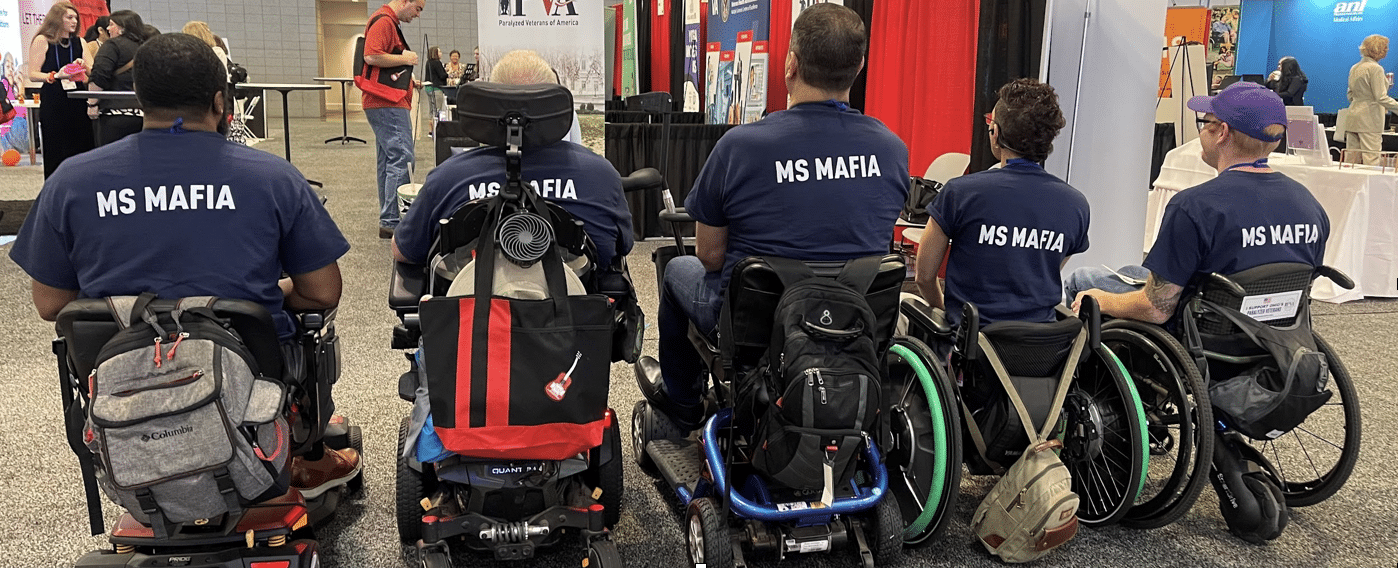
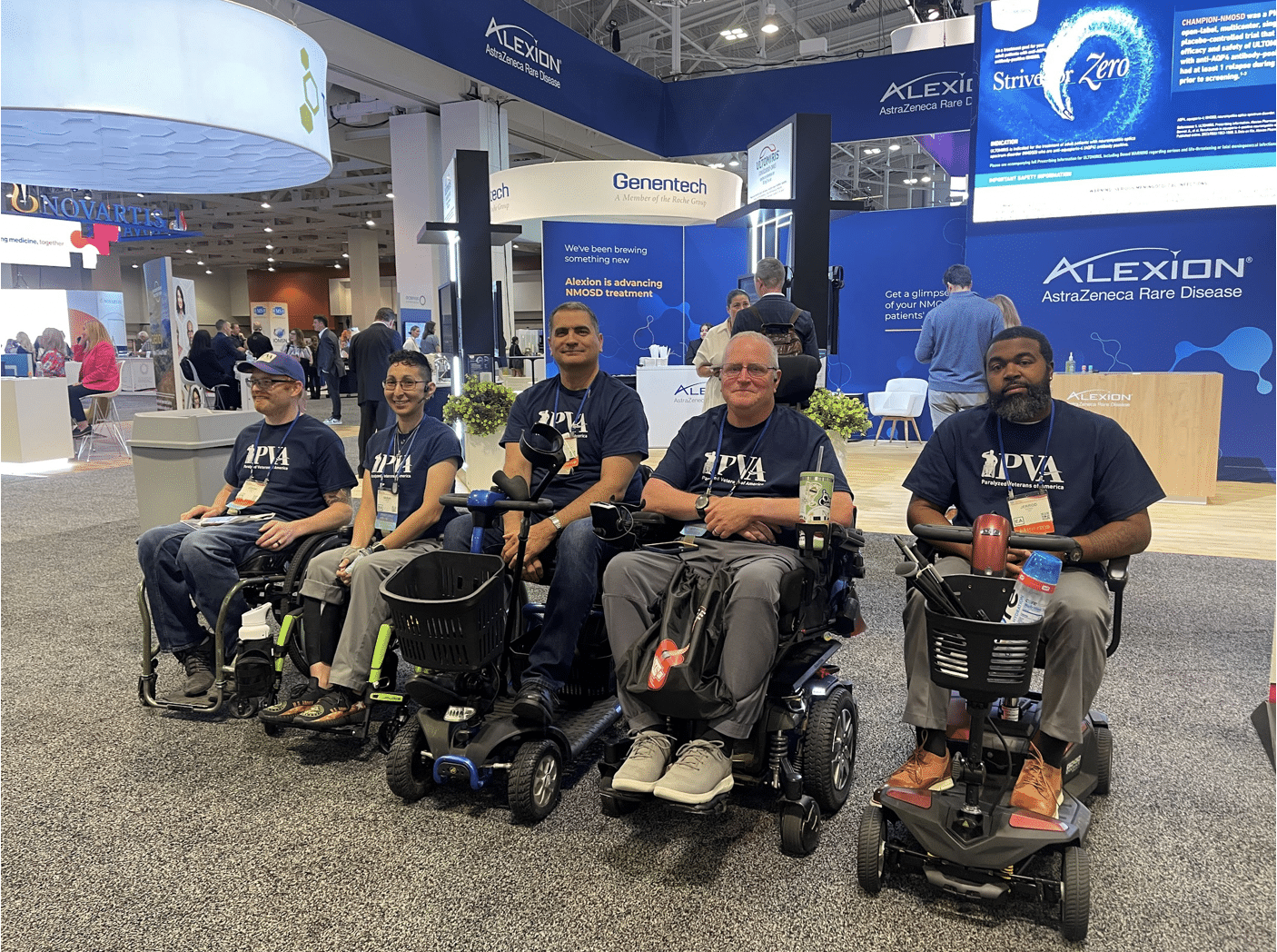
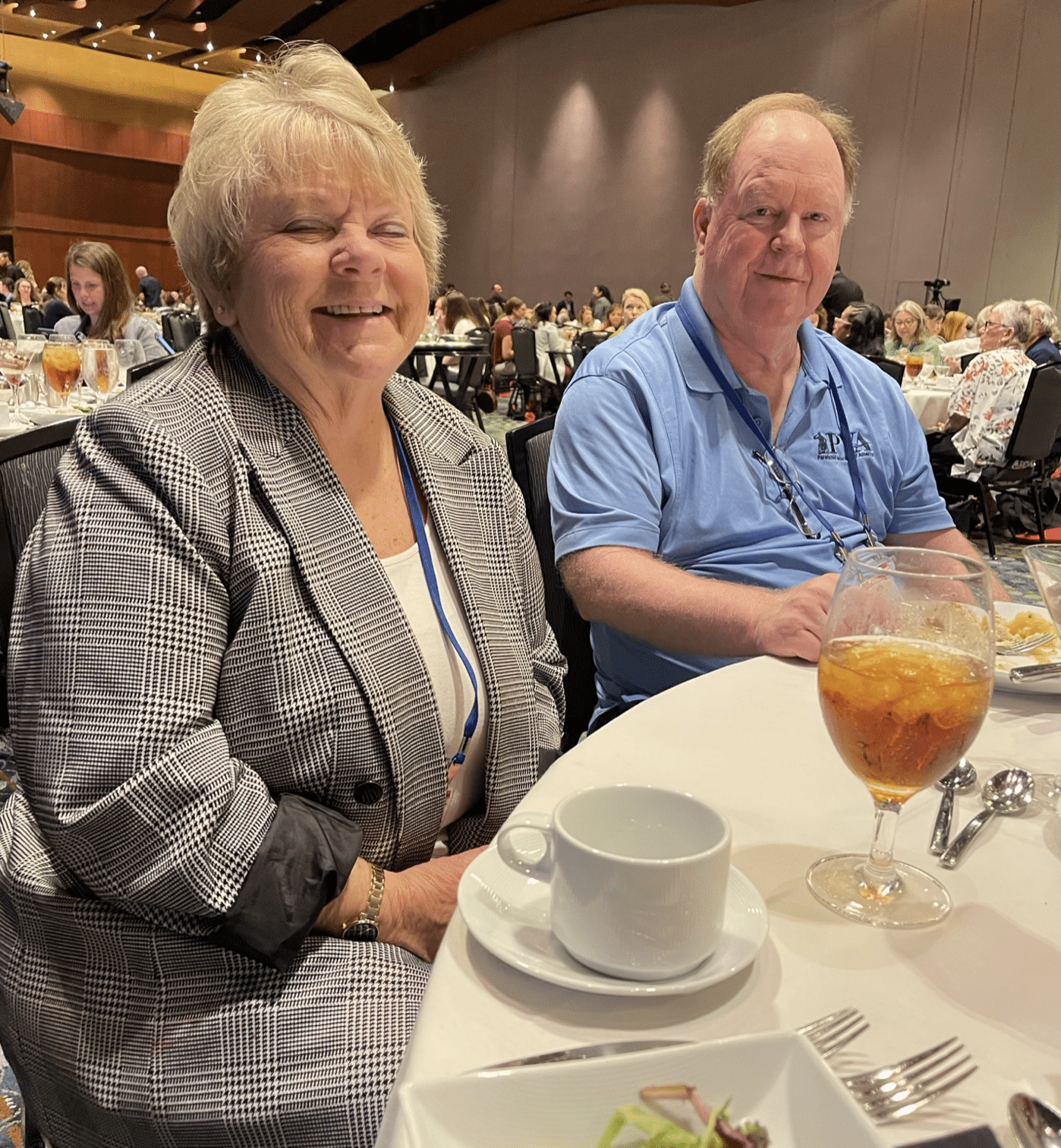
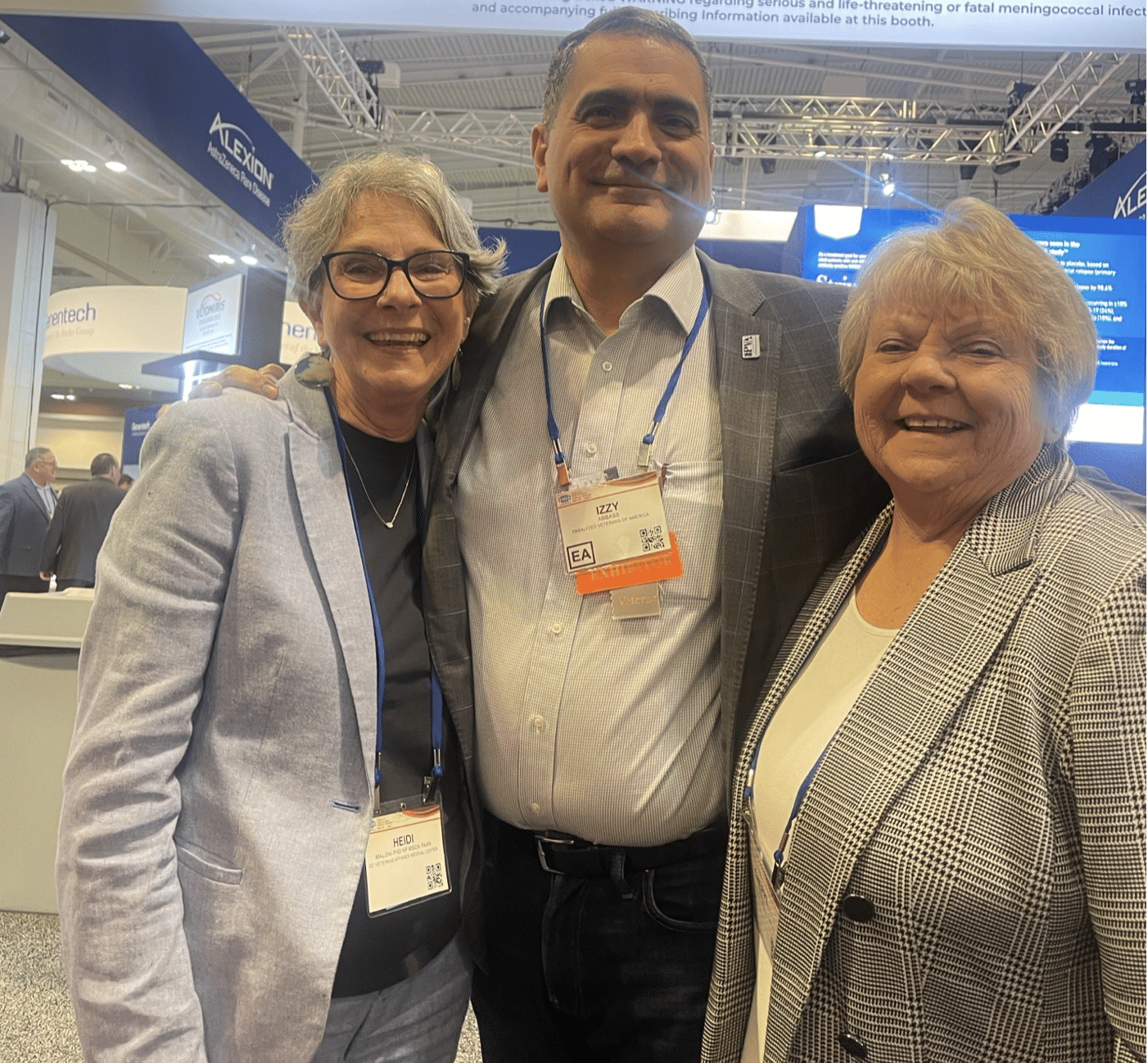
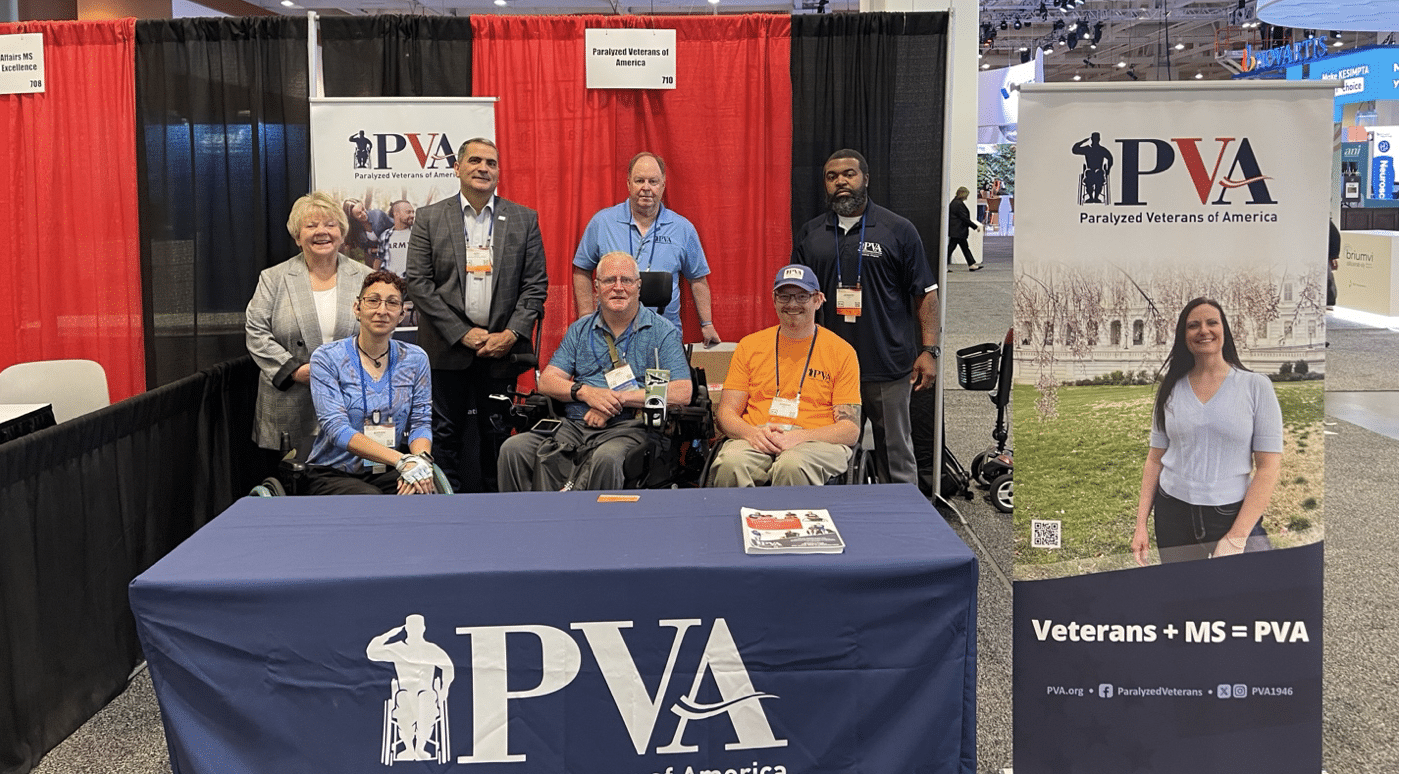
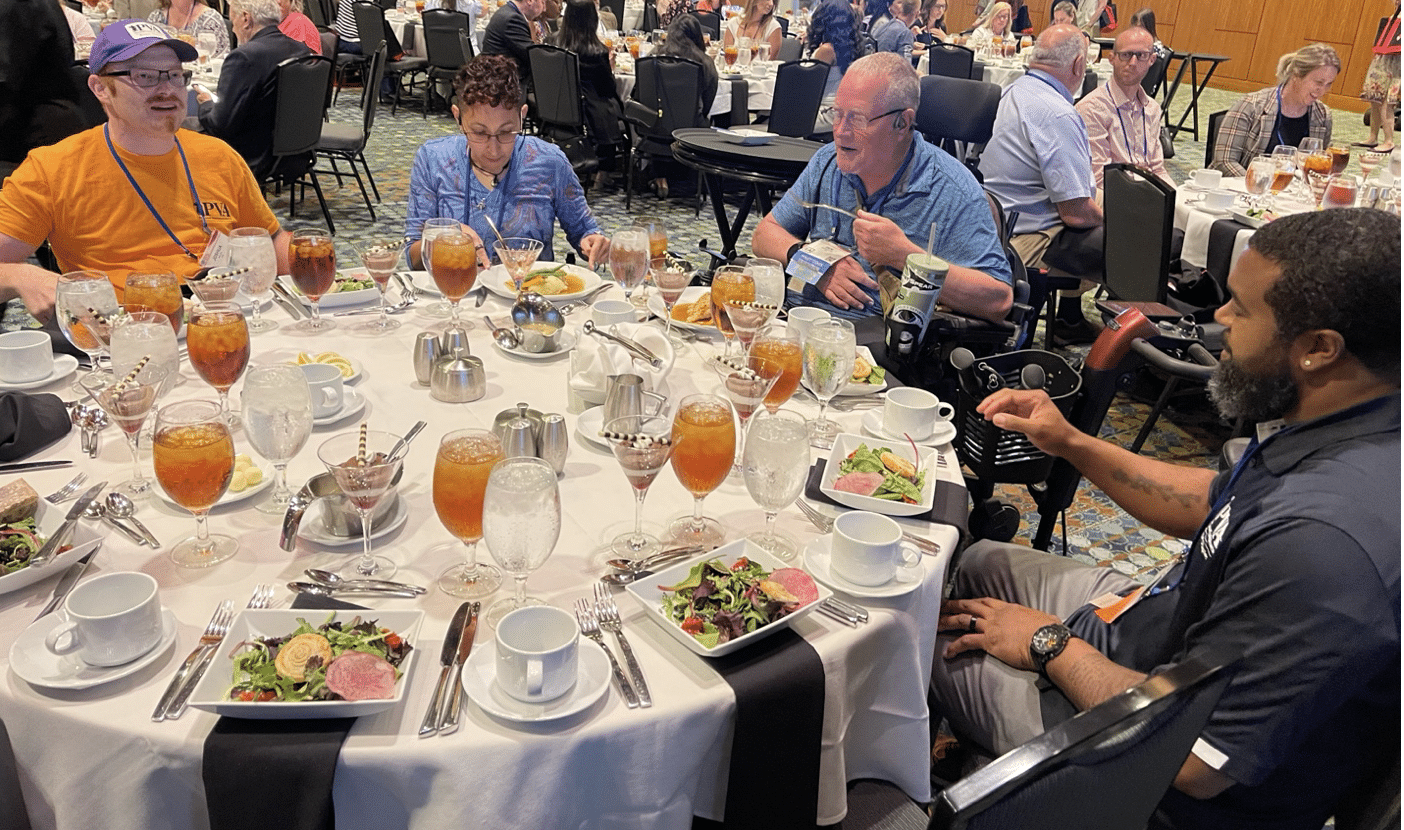
The Consortium of Multiple Sclerosis Centers is the leading research and educational conference for MS healthcare professionals in North America. For the second year in a row, PVA’s Multiple Sclerosis Committee maintained a presence at this event, educating healthcare providers on the PVA benefits available to their Veteran patients.
Many providers and patients (even within the VA) are still unaware that Veterans with multiple sclerosis are eligible to join PVA. The MS Committee, affectionately known as the MS Mafia, was on hand to increase awareness of PVA’s role in supporting MS care for Veterans and MS research.
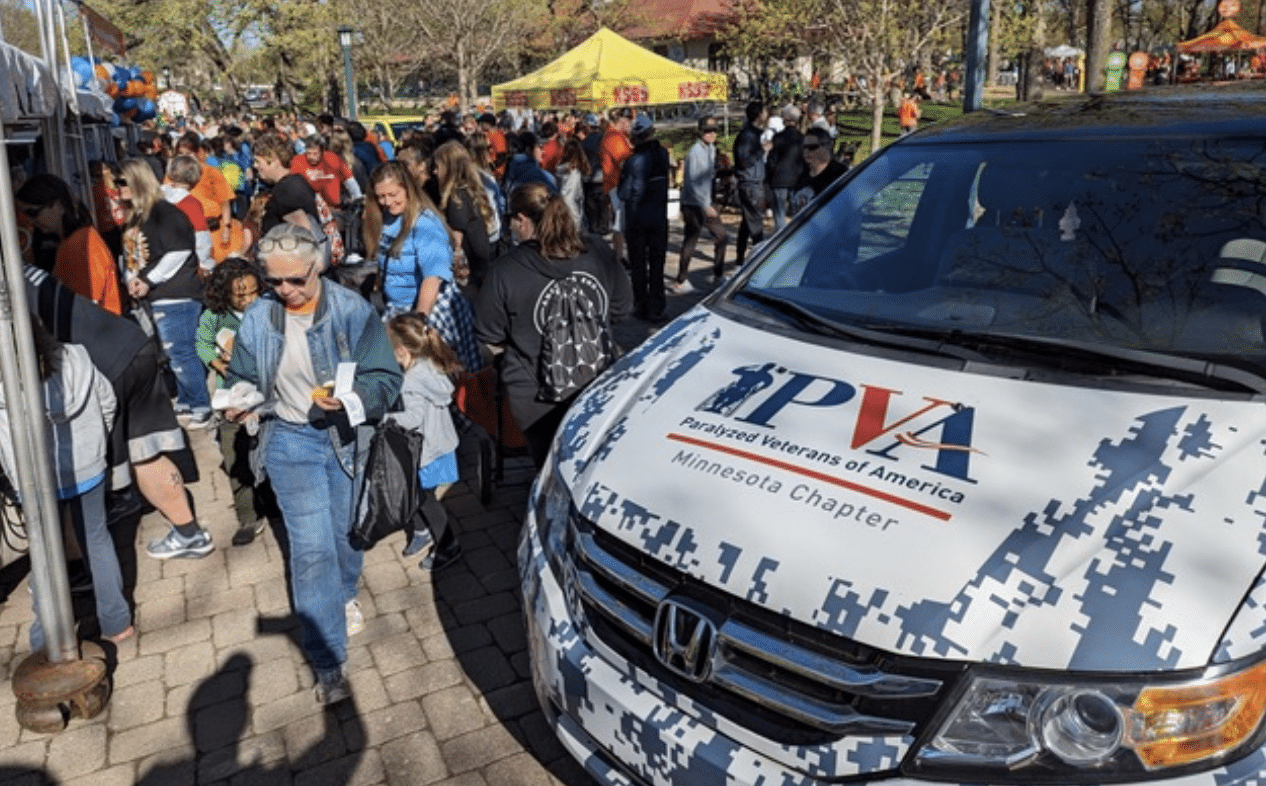
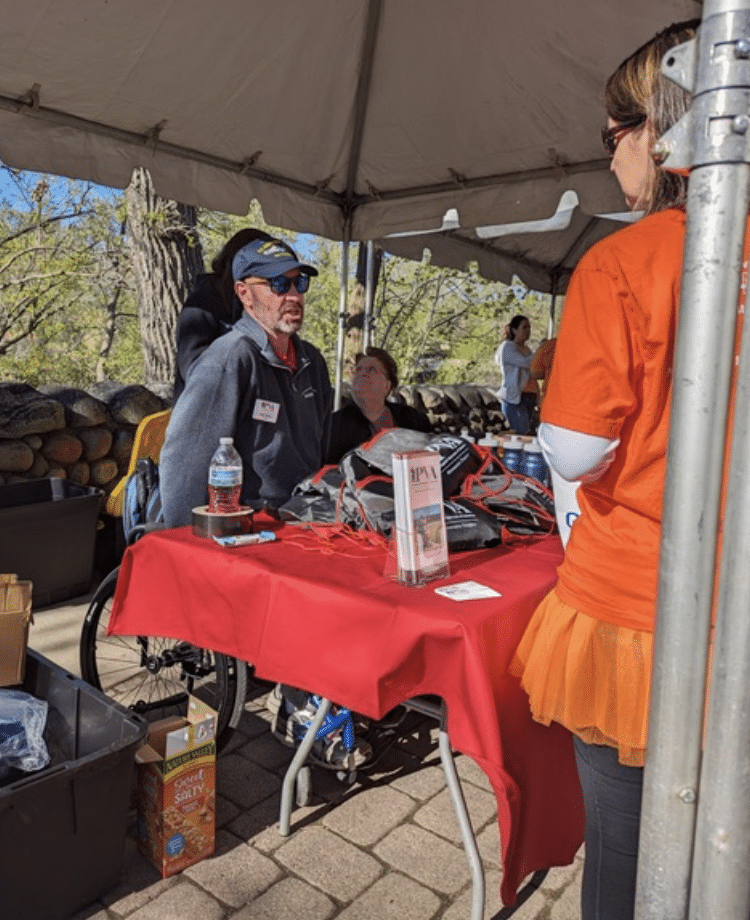
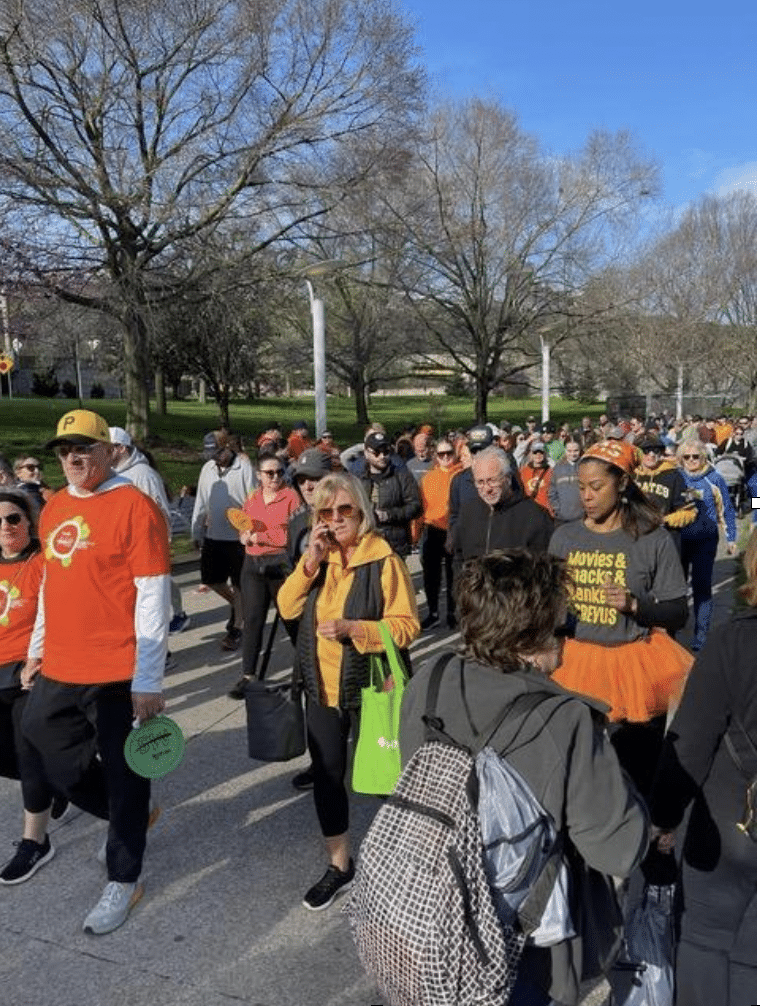
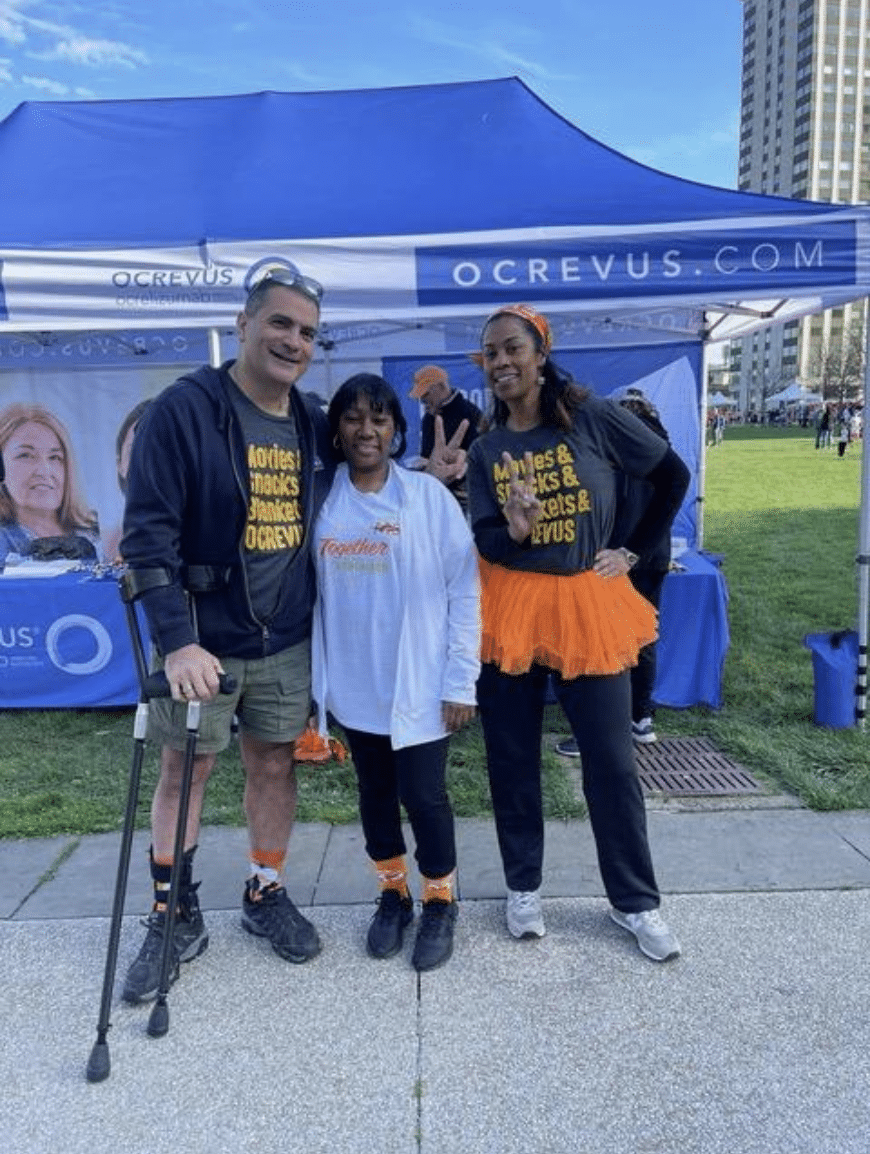
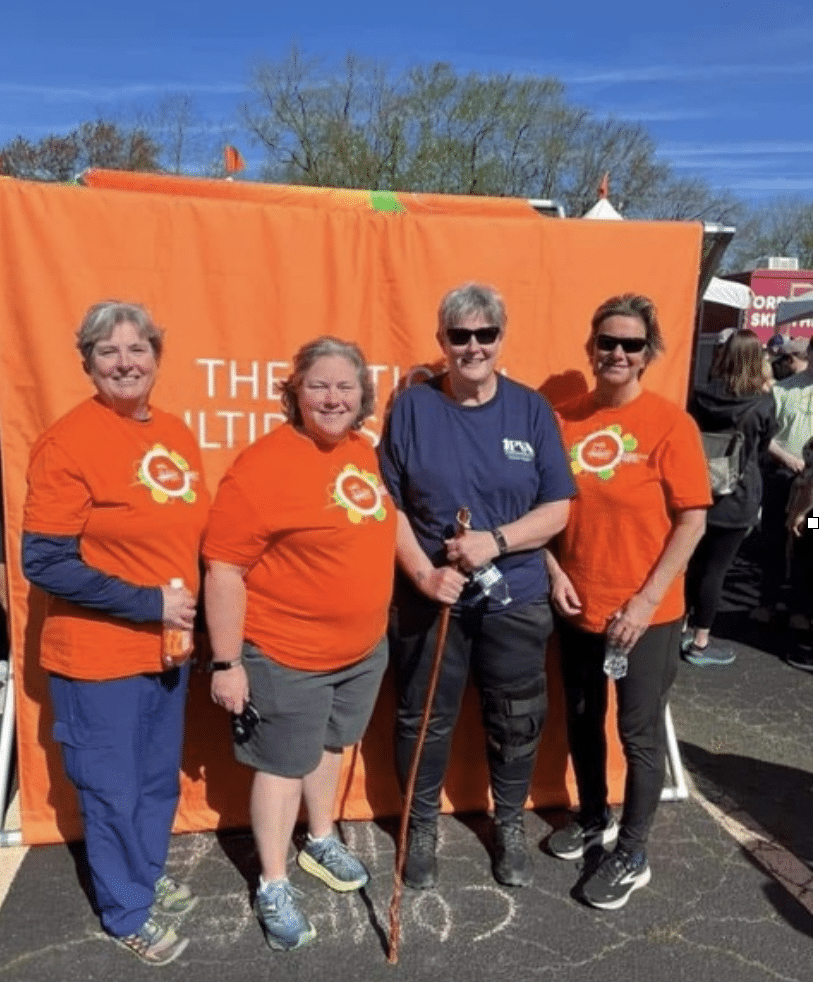
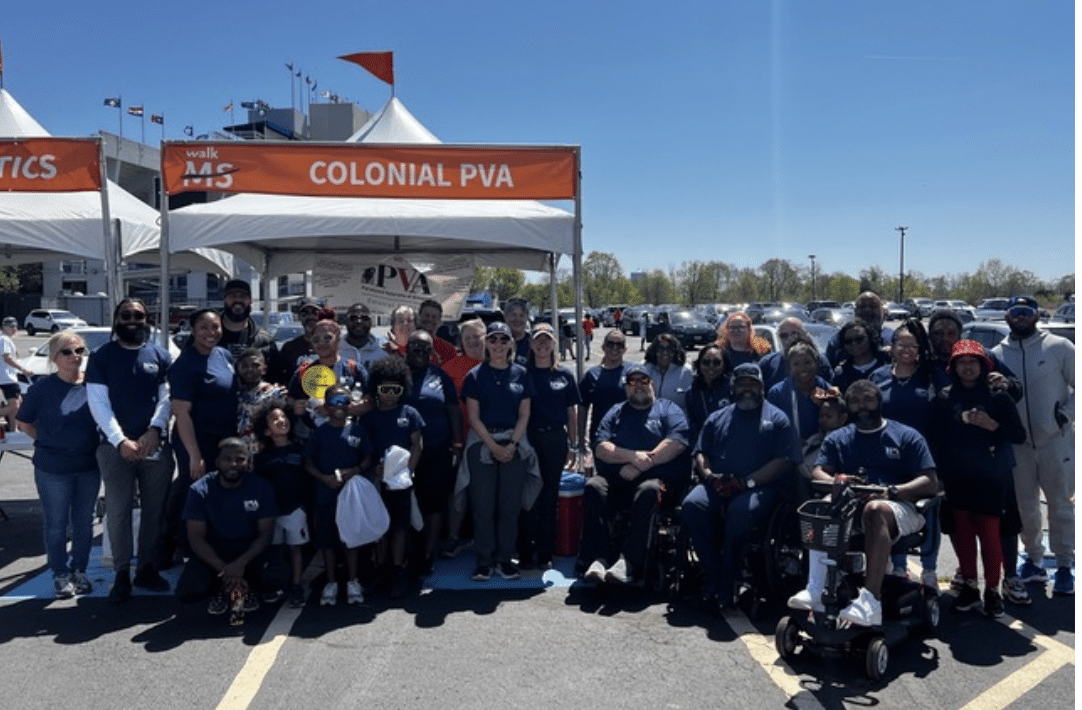
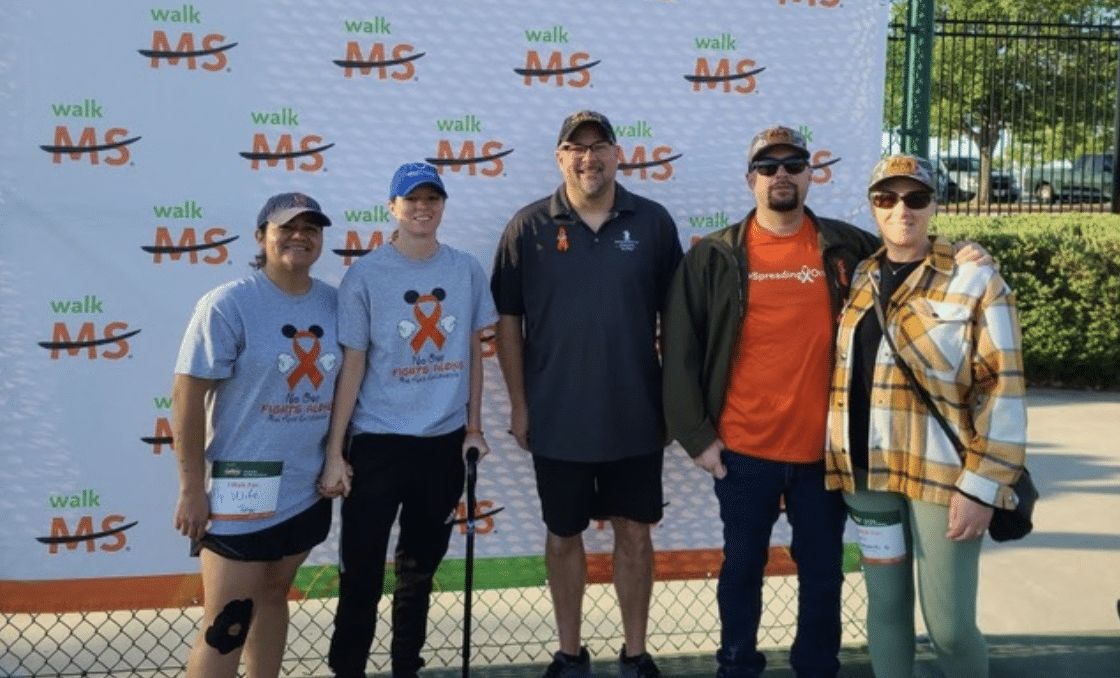
CHAPTER MS WALKS
Minnesota
Mountain State
Colonial
Texas

Opportunities
National MS Society Webpage for Veterans
Our Veterans with Multiple Sclerosis webpage includes information and links to Veterans resources including our Virtual Veterans-Self-Help-Group, Military Members, Care Partners and Ask an MS Expert Veterans Program. Please forward this newsletter to direct Veterans to the webpage and other resources.MS & Vets Podcast
The VA MS Centers of Excellence MS & Vets podcast series discusses important issues related to the health and quality of life for Veterans with multiple sclerosis. During every episode you’ll hear subject matter experts weigh in on multiple sclerosis issues and VA services. A new podcast is posted the second Monday of each month.
Can Do MS

Can Do helps families with MS thrive. Our free programs and resources help people living with multiple sclerosis and their care partners make each day the best it can be. Learn how MS can impact your life, find motivation and personalized guidance to overcome challenges, and build a positive support network. Be sure to check out their fantastic webinar series, as well as educational posts like this one on MS fatigue.
Print Brochures and Flyers
You can print or download brochures from:
- VA MSCOE https://www.va.gov/MS/
- National MS Society Patient Brochures: MS Educational Flyers and Brochures
- National MS Society Clinician Publications: National MS Society Clinician Publications
We Need Your Input...
Join an MS Committee Team TODAY!
As we work on initiatives, we need more input and assistance from you. While we don’t need you to get involved with everything, we do need you to think about doing something! Check out more about our MS Committee Teams below.
Recreation Team
We know MS presents unique challenges when it comes to participating in traditional sports and recreational activities. Among some of the events we’d love to coordinate or highlight include: a PVA MS Committee Retreat, similar to the annual PVA Women Veterans Empowerment Retreat, as well as Chapter-led events like local MS Walks. This team will work with PVA’s Sports & Recreation Department to explore and organize new opportunities for Veterans living with MS.
We know MS presents unique challenges when it comes to participating in traditional sports and recreational activities. Among some of the events we’d love to coordinate or highlight include: a PVA MS Committee Retreat, similar to the annual PVA Women Veterans Empowerment Retreat, as well as Chapter-led events like local MS Walks. This team will work with PVA’s Sports & Recreation Department to explore and organize new opportunities for Veterans living with MS.

Newsletter Team
Ben Hofmeister from the Mid-South Chapter and Sarah LaBrada from the California Chapter head up our MS newsletter efforts. If you are interested in helping out, writing an article, or have questions about what you read, email us at MSCommittee@PVA.org.
Ben Hofmeister from the Mid-South Chapter and Sarah LaBrada from the California Chapter head up our MS newsletter efforts. If you are interested in helping out, writing an article, or have questions about what you read, email us at MSCommittee@PVA.org.
ABOUT PVA'S MS COMMITEE
National MS Committee Members
Izzy Abbass – Co-Chair
Ken Ness – Co-Chair
Joe Bludeau – External Organizations Coordination
Jerrod Harris – Chapter MS Lead Liaison
Mike Partridge – Committee Member
Ben Hofmeister – Committee Member/Newsletter Editor
Ken Ness – Co-Chair
Joe Bludeau – External Organizations Coordination
Jerrod Harris – Chapter MS Lead Liaison
Mike Partridge – Committee Member
Ben Hofmeister – Committee Member/Newsletter Editor
PVA Staff
Cheryl Vines – Director of Research and Education
Juliet Pierce – Associate Director of Medical Services
Juliet Pierce – Associate Director of Medical Services
PVA Chapter MS Lead
(By Location and Name)
To contact your chapter MS lead, please call or email Jerrod Harris at 410-635-0145 or jharris@colonialpva.org or reach out to your local PVA Chapter office.



PVA is a 501(c)(3) tax-exempt, non-profit organization.
Donate | Privacy Policy | Financials | Careers
Paralyzed Veterans of America, 1875 Eye Street NW, Suite 1100, Washington, DC 20006
In accordance with IRS regulations, we confirm that no goods or services were provided by Paralyzed Veterans of America in return for contribution.