

The question sounds simple enough: Who gets to participate?
At South by Southwest on March 18, Paralyzed Veterans of America gathered a panel to work through the answer, and what emerged was less a feel-good conversation about ramps and reserved parking than a hard-edged argument about power, belonging, and the cost of getting it wrong.
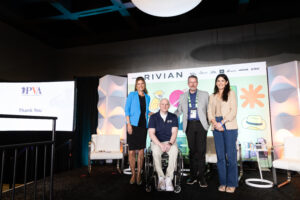
The panel, titled “Access is Power: Who Gets to Participate, and Why it Matters,” was moderated by Fox Sports broadcaster Jamie Little and featured PVA Chief Operating Officer Shaun Castle, Legends Global Regional Vice President John Drum, and Ariana Vargas, an award-winning social impact filmmaker who serves as the head of brand media & events for Populous, an architectural design firm that specializes in creating environments and venues that draw communities and people together.
 The event arrived just weeks after PVA launched "Power of PVA," a six-month public awareness campaign marking the organization's 80th anniversary.
The discussion wasted little time getting personal. Every time Castle boards a commercial flight, he stops drinking water hours before departure. Many commercial aircraft do not have accessible bathrooms, and the alternative is having an accident in public with no way to address it. A doctor eventually traced Castle’s recurring dizziness and fainting spells not to a cardiac condition but to chronic, repeated dehydration.
"I have to fully dehydrate myself every single time I get in an airplane," he said.
 The story wasn't offered for sympathy. It was offered as evidence that inaccessibility isn't an inconvenience. It’s a health consequence built into systems so normalized that most people never notice them. It also came with a policy footnote: PVA recently helped secure passage of the FAA Reauthorization Act of 2024, which requires all U.S. aircraft to include fully accessible wheelchair bathrooms within 10 years.
That pattern — personal experience, structural problem, legislative remedy — repeated itself throughout the hourlong discussion.
At U.S. Bank Stadium in Minneapolis, what began as a single handwritten letter from Linda Hood, a community member who asked if the venue would install an adult changing table, became something larger. The stadium said yes, invited Hood to unveil it, and watched as other Minnesota venues started calling to ask how they'd done it. State legislation eventually followed, requiring adult changing tables in new construction.
"That all starts with somebody advocating for the need," said Drum, whose leadership at U.S. Bank Stadium earned it the distinction of being the first NFL facility to receive the Barrier Free America Award in 2025.
The example illustrated a point the panel returned to repeatedly: accessibility failures are almost never the result of malice. They are the result of who is and isn't in the room when decisions about accessibility get made. Castle described attending a university meeting about improving campus accessibility, only to discover the meeting itself was being held in a basement with no ramp. The oversight wasn't hostile. It was the predictable outcome of planning without the people most affected.
Panelists pushed back on the common assumption that accessibility is expensive and disruptive. Drum described the accessibility features at the Buffalo Bills' new stadium, where PVA and Populous are helping design a facility that includes a lift, critical equipment for people with high-level mobility disabilities. The lift costs a few hundred dollars and opens the door to an entire category of fans who previously weighed the logistics of attending an event against the indignity of not being able to use a bathroom — and stayed home.
"You've opened up another possible demographic for your customers who feel valued," Castle said. "And that's where their money is going to go."
Vargas came at the economics from a different angle. Exclusion, she argued, doesn't just cost businesses customers. It costs communities their members. When people feel unwelcome in a stadium, workplace, or school, they withdraw. They socialize less. They participate less. And the longer that cycle runs, the harder it is to reverse.
"Productivity goes down. The economy suffers. People don't consume the things they want because they're isolating,” she said. "I don't know if people realize how big of an effect it has when you don't make people feel welcome.”
Her work centers on the argument that the most effective tool for breaking that cycle isn't policy or compliance, it's narrative. The stories we tell about disability shape what people believe is possible. According to Vargas, the dominant story about schizophrenia in American media for decades was a criminal one, whether it was a fictional tale from “Law & Order,” or a crime reported on the evening news. When that's the only story available, it becomes the frame through which people understand an entire category of human experience. The same dynamic plays out across disability, neurodivergence, and mental health.
"The power of stories is not the story itself," Vargas said. "It's who tells the story, how often they're telling it, and how."
 The panel's sharpest exchange came during Q&A, when an audience member asked how disability advocates respond to elected officials who invoke inclusion as a pejorative. The answer drew on history: the Americans with Disabilities Act didn't arrive because a president woke up one morning and signed it. It was the result of decades of organizing, including the Section 504 sit-ins of 1977, when disability activists staged occupations of federal buildings to demand enforcement of existing civil rights protections.
"There are always going to be moments where it feels like we're doing good, then we get pushed back a little bit," Castle said. "Continue to use your voice. Continue to partner with organizations. Continue to partner with like-minded individuals. That's how we get legislation changed."
Little closed the discussion by asking Castle how to sustain the momentum beyond the panel. He warned against the familiar trap of leaving a conversation energized, only to slip back into old habits, and said that meaningful change isn't forged in sweeping moments. It's built through small, deliberate choices made day after day.
"Change doesn't come in revolutions. It comes in evolutions. It is moment after moment, day after day, choosing to make the next thing just a little more accessible."
For more information about Paralyzed Veterans of America and its programs, visit pva.org.