

By the time a caregiver reaches out for help, the clock is already running. For veterans living with ALS, a disease that progresses relentlessly, stripping away speech, movement, and independence, there is no time to navigate the complex bureaucracy alone. That's where Paralyzed Veterans of America steps in.
 Recently, a social worker at an ALS clinic in Massachusetts received a voicemail. A woman in the Baltimore area was desperate. Her husband, a veteran living with ALS, had never enrolled in VA healthcare. He had no active benefits claims, no service records on file with the VA, and the disease had already taken his voice.
Within just a few hours, PVA National Service Officer Zachary Nuetzel had returned the call.
What followed was a demonstration of what PVA does better than anyone else: move fast, act comprehensively, and make sure no veteran or their family feels alone.
Starting From Zero
When Nuetzel took power of attorney for the veteran, the VA file was essentially empty. No prior claims, no service connection, no healthcare enrollment. For most organizations, that would mean weeks or months of paperwork and waiting. For PVA, it meant same-day action.
 Nuetzel obtained the veteran's DD-214, submitted an intent-to-file to protect his effective date, drafted a 21-526EZ application for disability compensation, a 26-4555 Specially Adapted Housing grant, and a 21-4502 Automobile Adaptive Equipment grant. He also completed a 10-10EZ form to begin VA healthcare enrollment.
"In this particular case, from the time of the actual claim to receiving their rating decision was two days," Nuetzel said. For context, the average number of days to complete disability claims in March 2026 was 75.7 days, according to the VA.
The reason for the speed was two-fold: VA policy requires expedited processing for ALS claims, and PVA's preparation ensured the submission was complete on arrival.
"The way we prepare and present the claim to (the VA) tremendously helps," said Mike Sheets, PVA's East Region Director. "And then the relationships that we have built with VA, because we can get them right to the processors."
A Handoff Without Hiccups
Because the veteran lived in the Baltimore area, Sheets assumed oversight of the case from Nuetzel — a geographic handoff that could easily have created delays or gaps. It didn't.
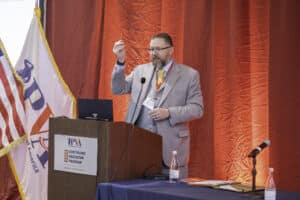 "The transition was seamless," Sheets said. "Zach even told us on the onset what needed to come next, so I didn't have to do any guesswork."
Sheets, who lives in Nebraska, was quick to point out that this kind of coordination isn't unique to this case. It's how PVA operates across the country. When a veteran recently relocated from the Northeast to Florida and had a wheelchair issue, Nuetzel made one call to a PVA service officer at the VA Spinal Cord Injury Clinic in Tampa, Florida. The veteran was contacted the same day.
"I feel I can call any NSO in the country and know that I could get a response back to assist a veteran," Nuetzel said. "They're going to have the contacts and the connections to assist them."
That national reach is backed by something more personal. All of PVA's National Service Officers are veterans. Sheets, a Marine Corps veteran who deployed to Iraq twice between 2002 and 2006, and Nuetzel, also a Marine who served from 2013 to 2017, bring firsthand knowledge of the VA benefits system to every case they work.
"Many of our NSOs have done the same thing," Sheets said. "They've gone through their own benefits claims process, and they know how the struggle can be from the veteran's standpoint."
More Than Benefits
When asked what the most meaningful thing PVA had done for this veteran and his spouse was, Sheets didn't hesitate.
"Conveying to them that they're not alone on this journey," he said. "We're going to be with both of them throughout the process, and even beyond that. Because we will be with the surviving spouse when that time comes, for the rest of her life."
That promise isn't symbolic. PVA commits to contacting every veteran living with ALS at minimum every three months, given how quickly the disease can progress. Spouses and caregivers are kept in the loop throughout, and after the veteran passes, PVA continues to represent the surviving spouse, helping with dependency indemnity compensation, education assistance, caregiver benefits, and even career support through PVA's Veterans Career Program.
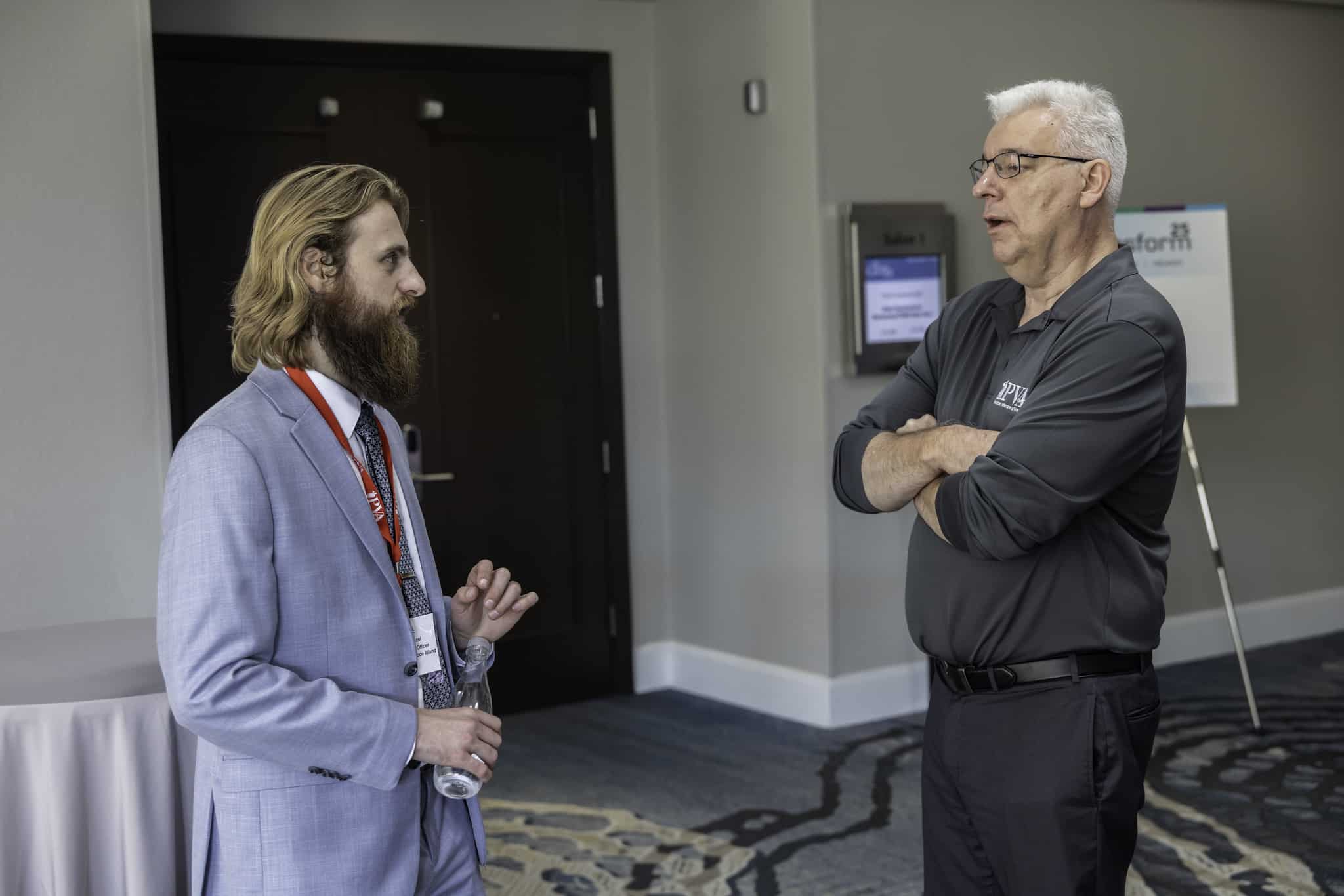
"We'll be there from the moment we meet you," Nuetzel said. "We'll be advocating for you. After you pass, we'll also be able to ensure that your family is receiving all of their benefits."
For this particular veteran's wife, who, like her husband, has chosen to remain private for this story, that commitment arrived at a moment of profound overwhelm. In less than a week, a man who had never interacted with the VA system was fully enrolled in VA healthcare, had a completed benefits claim, and was set to receive his first VA compensation check the following month.
Nobody Does What PVA Does
ALS Awareness Month is an opportunity to spotlight what PVA members and their families already know: that PVA offers a comprehensive, cost-free network of advocacy unlike anything else available to them.
"Nobody does what we do for veterans who have ALS," Sheets said. "There are others that cover one facet, or maybe two facets. But nobody does what PVA does."
Veterans living with ALS don't need to be PVA members to receive representation from a national service officer. They simply need to find PVA and reach out. From there, the organization handles the rest — benefits, healthcare enrollment, housing grants, adaptive equipment, caregiver support, and a promise to stay by their side for a lifetime.
As Sheets put it, "When we take their power of attorney, it's not just Zach that they get. It's not just me that they get. They get all of PVA."
To find a PVA National Service Officer near you, visit PVA.org/Benefits.