

At South by Southwest, a conference known for launching the next big thing, Paralyzed Veterans of America made the case last week that the most transformative ideas in technology, design, and culture haven't come from abundance. They've come from need and the courage to challenge the status quo.
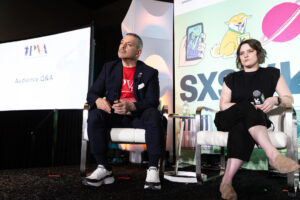
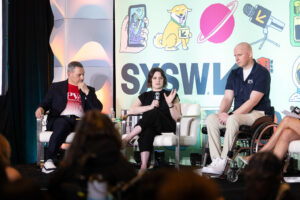 The panel discussion, "Disability: The Ultimate Innovation Driver," brought together a sports journalist, a veteran-turned-nonprofit executive, a global interior designer, and a former Fortune 500 diversity leader to argue that disability isn't a limitation to design around, it's a competitive advantage that most organizations are still leaving on the table. One billion people globally have a disability, according to the World Health Organization, when considering the spending power of this market segment, companies and organizations are leaving $8 TRILLION ON THE TABLE.
The conversation came at a meaningful moment for PVA. Earlier this month, the organization officially launched the “Power of PVA,” a six-month public awareness campaign marking its 80th anniversary. Since World War II, PVA has spent eight decades advocating for veterans with spinal cord injuries and diseases such as ALS and MS, as well as all people with disabilities. SXSW, a global gathering where technology, culture, and creativity collide, offered PVA a fitting stage to carry that message forward.
Jamie Little, a Fox Sports broadcaster who covers NASCAR and IndyCar, hosted the session. Her connection to disability advocacy is personal. Her father suffered a major stroke two decades ago and lives today as a hemiplegic.
"Anything I can do to advocate and raise awareness for those with disabilities," Little told the audience, "I do it."
 Lived Experience as the Foundation
PVA Chief Operating Officer Shaun Castle, a U.S. Army veteran who uses a wheelchair following a military training injury, anchored the panel's opening with a principle that echoed throughout the hour: innovation begins with need.
Castle pointed to his work helping establish a wheelchair basketball arena at the University of Alabama, not as a feel-good story, but as a lesson in how lived experience forces a clarity of vision that conventional design processes miss. The team he played on was sending 12 athletes to the Paralympics, boasted the highest GPA on campus, and was drawing bigger crowds than the able-bodied basketball programs, yet they still had to ask someone for a key to unlock the cage where their chairs were stored.
"All innovation comes from a point of what is necessary," Castle said. "What is needed for someone in their life to be able to be successful, to have the opportunity to move forward."
He was equally direct about the daily barriers that remain. A recent flight to Austin required him to dehydrate himself before boarding because accessible lavatories are not widely available on commercial aircraft — a problem PVA helped address through legislation, including the FAA Reauthorization Act of 2024.
"The challenge in front of you is either go through, go around, or go over," he said. "Finding out what you are going to do and how you're going to do it is truly one of the most important things for a person with a disability."
That problem-solving instinct, Castle argued, is exactly what organizations should be tapping. People with disabilities navigate inaccessible systems every single day. That's not a burden to be accommodated, it's a mindset to be recruited.
 He also pointed to PVA's broader research legacy as evidence of what disability-driven innovation can produce at scale. Over more than four decades of partnership with Yale University, PVA helped fund research that ultimately identified the pain gene within the human genome. That work led to the recent release of a non-narcotic acute pain medication — with a chronic version currently in development — that Castle described as potentially life-changing for people around the world.
"It came from an innovation. … We have spinal cord injury patients who have chronic pain needs. How do we find the innovation that will change their lives?" he said. "Now you have a world-changing innovation that came from a need that was there."
Designing for the Edge Case
Gabrielle Hundley, a senior associate interior designer at Populous and co-chair of the firm's Inclusive Design Cohort, pushed back on the very language used to describe users with disabilities.
The term “edge case” is sometimes used to describe a disability or impairment as a rare or unusual user scenario, one that gets ignored to keep the product — a building, airplane, or laptop — "standard." This way of thinking treats accessibility as an afterthought rather than a core part of the design, which leads to products that don't work well for everyone.
"Edge cases are actually a large part of our population that we've just sort of ignored over time," she said. Designing for that population, she argued, isn't a niche concern — it's what good design actually looks like.
Hundley described the difference between retrofitting accessibility into existing designs versus building from the ground up with a full range of users in mind. The former, she said, loses something essential.
"There's so much thought lost in that — it's not a thoughtful application of how it's going to be used." Starting fresh, she said, creates space for real intent rather than a modified version of something built for someone else.
Her work at Populous, an architectural design firm that specializes in creating environments and venues that draw communities and come together, puts that philosophy into practice in spaces where the stakes are high and the user diversity is enormous. Hundley described the importance of being present at a venue's opening day, watching how people actually move through spaces, noticing where friction occurs.
"Pay attention. Look around. See what people are experiencing," she said. "You see things that you didn't expect, and that's the gift."
That observational instinct extends to invisible disabilities as well. Hundley described her firm's increasing focus on sensory design — controlling acoustics, lighting, and spatial adjacencies to reduce overwhelm for people with sensory sensitivities, ADHD, autism, and other neurological differences. She pointed to the growing integration of sensory rooms and wellness spaces into venue design, as well as the importance of giving individuals control over their immediate environment: adjustable lighting, sound dampening, tactile elements.
"Adaptability is really the key part of all of that," she said.
A Beauty Innovation Built on the Same Principle
The panel's most concrete product-level illustration of disability as innovation driver came from Nicholas K. Iadevaio, Jr., former L'Oréal USA Vice President of Diversity, Equity, and Inclusion, who described HAPTA, a handheld, AI-assisted lipstick applicator developed by Lancôme for people with limited hand and arm mobility.
The device uses sensor-based stabilization with two internal motors and nine-axis accelerometers with a self-leveling hinge system to distinguish between unintended handshakes and intended movement, stabilizing the device in real-time. The device also uses artificial intelligence to learn from a user’s movements, constantly adjusting to maintain a steady position, allowing for 360-degree rotation and 180-degree flexion. These technologies together give users with motor disabilities the ability to apply makeup independently.
PVA played a meaningful role in introducing HAPTA to the disability community, and Iadevaio described watching the device demonstrated the previous summer at a conference alongside PVA members. The response was immediate. "People’s response after trying the device was very positive and interested… even if they didn’t identify as having a motor disability.”
The partnership between PVA and L'Oréal on HAPTA reflects a core argument the panel made repeatedly: products designed for people with disabilities don't just serve that community, they also expand the market.
"It's not just people who have disabilities," Iadevaio said. "It's the people who are emotionally connected to them that will buy a brand — or not — based on how people with disabilities are being represented.”
‘Are You Willing to Speak Up?’
As the session wound down and audience members stepped to the microphone, Castle issued a challenge that distilled the panel's core message into something actionable.
The conversation happening at SXSW, he said, only matters if it continues after people leave the building. One of the most persistent misconceptions about disability, he argued, is that meaningful accommodation is expensive. Most of the time, it simply isn't.
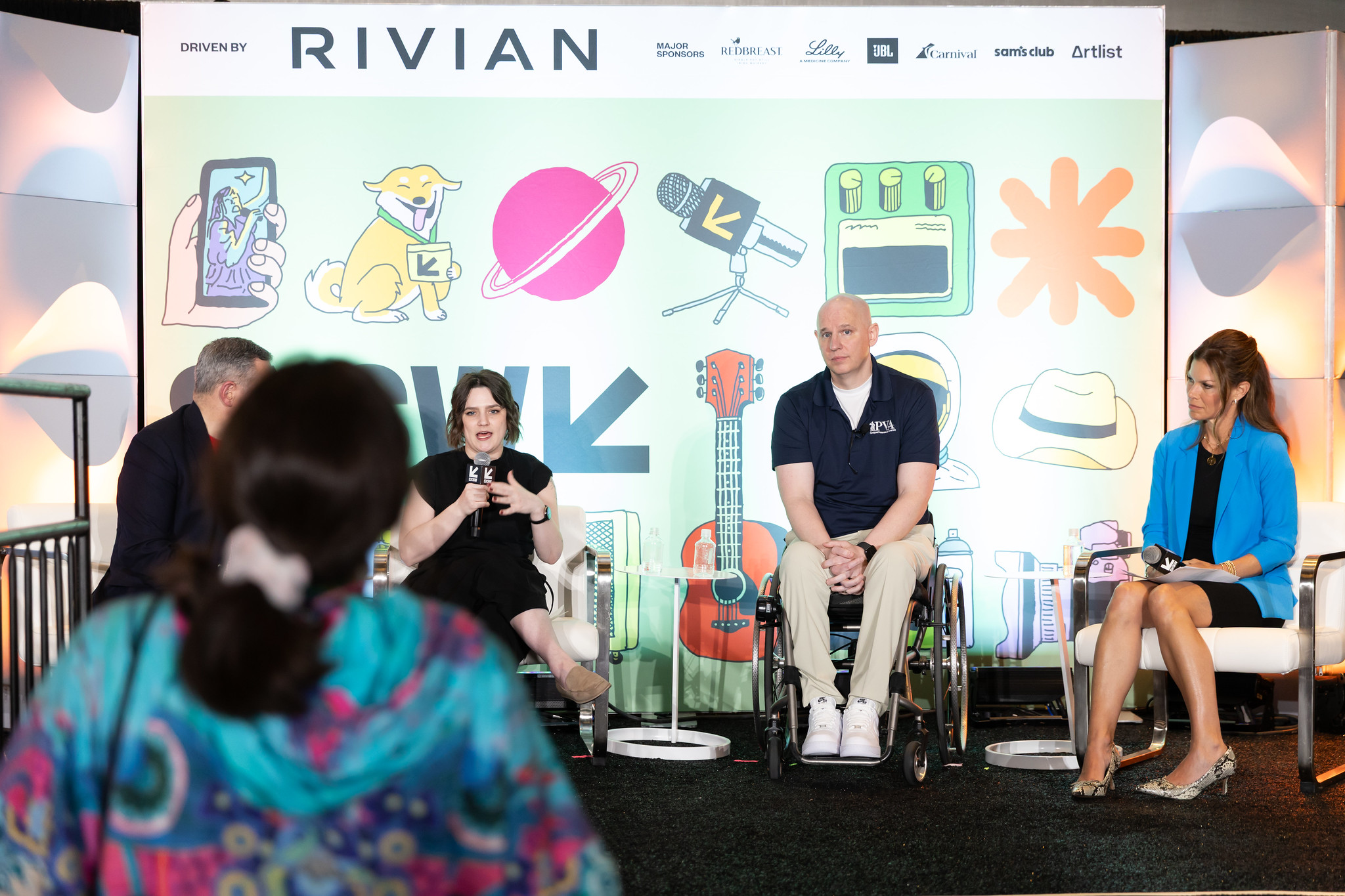
"It doesn't cost millions of dollars to make people feel included and lower the barrier to entry for their entire life," he said. "It's about continuing to have a conversation around what the needs are — and then can we innovate those? Can we implement those?"
He also addressed the question of how non-disabled people can show up as genuine allies — not by offering pity, but by asking better questions. Is this ramp set up the way you need it? Is this space comfortable for you or your family member? Simple questions, he said, are not intrusive — they're invitations. "You won't know unless you ask."
Castle closed with a challenge to everyone in the room: "Are you willing to speak up when there's not a curb cut out, or when you don't have the basic things for someone who is neurodivergent to feel comfortable at your workplace? Are you an ally for the people who are only asking for the basic things that everybody in life is entitled to?"
For PVA, now 80 years into that work, the answer has never changed.
For more information about Paralyzed Veterans of America and its programs, visit pva.org.