


A diagnosis of amyotrophic lateral sclerosis (ALS) is life-changing under any circumstances. For veterans, it can feel especially isolating. It’s a battle fought not on foreign soil, but within the body of someone who already gave so much in service to this country. According to an American Academy of Neurology study, veterans are twice as likely to develop ALS compared to the general population, and many with the disease face complex benefits systems and little guidance on where to turn.
Paralyzed Veterans of America has spent decades ensuring those veterans are never left to fight alone. As a leading advocate for the health, dignity, and quality of life of America’s veterans, PVA delivers hands-on support, legislative muscle, and community connection to those facing an ALS diagnosis and the families standing beside them.
Here is a closer look at six critical ways PVA shows up every single day for veterans living with ALS.
1. Navigating VA Benefits and Claims
The Department of Veterans Affairs’ benefits system is complex under the best circumstances. For a veteran newly diagnosed with ALS, it can be overwhelming. PVA’s national service officers help veterans and their families navigate one of the most challenging moments of their lives, cutting through bureaucracy to file claims, appeal denials, and secure the full benefits they have earned through service. For veterans living with ALS, that support means faster access to VA compensation and health care through presumptive service connection — critical help that can ease financial strain, reduce uncertainty, and ensure no veteran faces this disease alone. This guidance is free, expert, and exclusively focused on the veteran’s best outcome.
For veterans living with ALS, that support means faster access to VA compensation and health care through presumptive service connection — critical help that can ease financial strain, reduce uncertainty, and ensure no veteran faces this disease alone. This guidance is free, expert, and exclusively focused on the veteran’s best outcome.
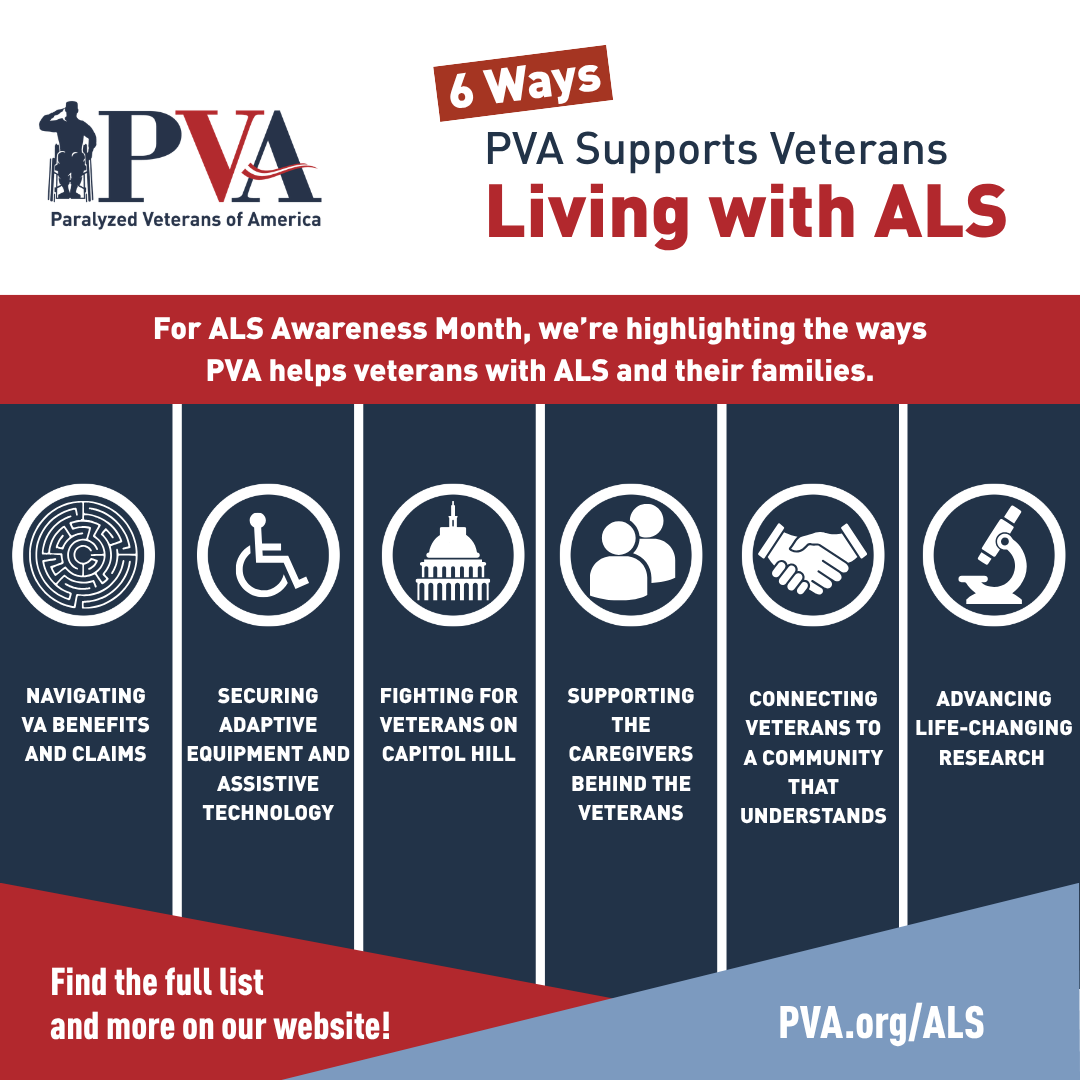
2. Securing Adaptive Equipment, Home Modifications, and Assistive Technology
As ALS progresses, everyday independence depends increasingly on the right equipment — power wheelchairs, communication devices, home modifications, and respiratory support tools. Our national service officers advocate directly with the VA cutting through the bureaucracy to ensure veterans receive timely access to the adaptive technology they need to maintain quality of life.
No veteran should wait months for a wheelchair or lose their voice without access to a communication device. Meanwhile, our licensed architects provide free accessible design consultations to ensure veterans navigating ALS live comfortably and maintain their independence for as long as possible.
3. Fighting for Veterans on Capitol Hill
PVA doesn’t just serve veterans one at a time. It fights for all of them in the halls of Congress. PVA’s government relations team pushes for legislation that expands support for ALS research, improves veterans’ disability compensation benefits, and increases support for veteran caregivers. When lawmakers debate veteran health policy, PVA’s voice is in the room.
4. Supporting the Caregivers Behind the Veterans
ALS is a family diagnosis. Spouses, children, and loved ones often become full-time caregivers, sacrificing careers, finances, and their own wellbeing to help the veteran they love. PVA recognizes that supporting a veteran with ALS means supporting their entire support system. Through caregiver resources, referrals, and advocacy for caregiver benefit programs, PVA helps ensure the people behind the veteran don’t fall through the cracks.
5. Connecting Veterans to a Community That Understands
Isolation is one of the most painful dimensions of an ALS diagnosis. PVA’s national network of Chapters, service officers, and fellow veteran members creates a community where no one has to navigate this road alone. Veterans living with ALS can connect with peers who understand the unique intersection of military service and serious illness, and find strength from knowing others are right there with them.
6. Advancing Life-Changing Research
PVA invests in vital research aimed at understanding why veterans develop ALS at elevated rates and what can be done to improve outcomes. By funding research studies, partnering with medical institutions, like Harvard University, and keeping pressure on federal agencies to prioritize veteran-specific ALS research, PVA is working toward a future where fewer veterans receive this diagnosis — and those who do have far better options.
ALS is relentless, but so is PVA.
To learn more about ALS and how you can help PVA support veterans and all people living with ALS, visit PVA.org/ALS.